
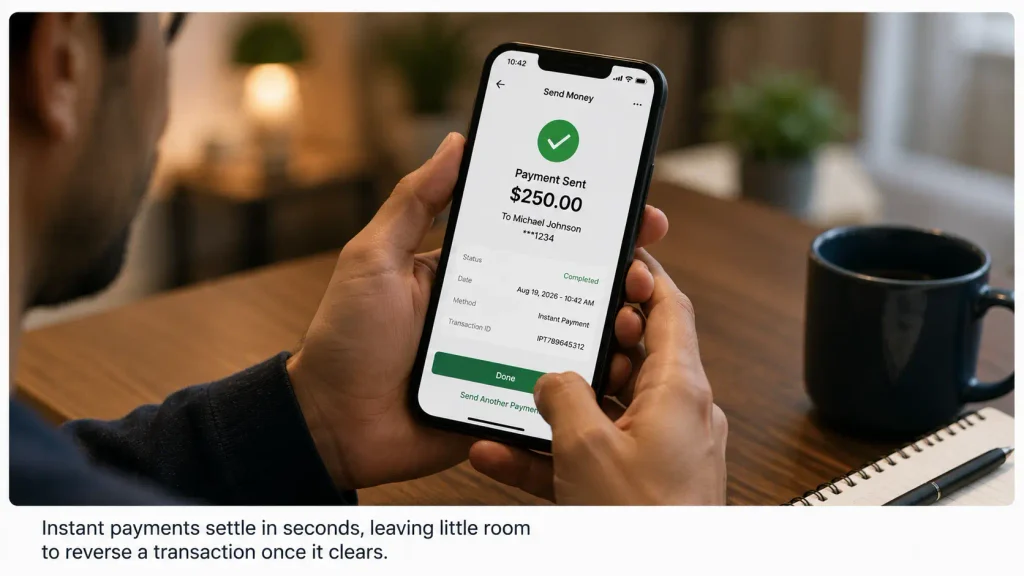
FedNow and Zelle Scams there’s a good chance you won’t get your money back if a scammer uses Zelle or a bank’s FedNow-enabled app to trick you into sending them money, and your bank might not be required by law to return it. This isn’t speculative. It boils down to a particular flaw in the federal consumer protection law, which was drafted decades before instant payments were a thing.
How FedNow and Zelle Instant Payments Work
The Federal Reserve introduced FedNow, which enables banks to transfer funds between accounts in a matter of seconds on any day of the year. Something functionally similar is provided by peer-to-peer apps like Zelle. The money leaves the sender’s account almost instantly after a payment clears. That is not the same as a credit card charge or even a regular ACH transfer, which both usually give a bank a few days to dispute or reverse a transaction. That window is largely absent with instant payments.
Why Regulation E May Not Cover Authorized Payment Scams
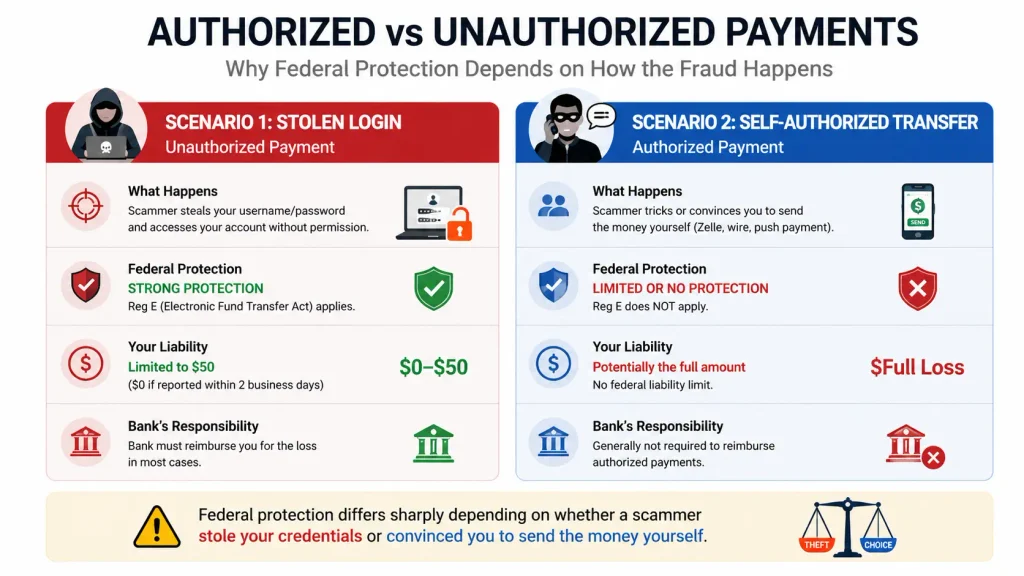
The Electronic Fund Transfer Act, which is enforced by Regulation E, provides federal protection for electronic transfers. If someone steals your account information and uses it to transfer your money without your knowledge, you are protected by that law. It does not, however, explicitly guard against a different, more frequent situation in which a con artist persuades you to approve the transfer on your own.
FedNow and Zelle Scams Authorized push payment fraud is the most common way that criminals take advantage of instant payment systems. Typical examples include a phony urgent alert, a call purporting to be from your bank alerting you to questionable activity, or a message stating that you must transfer funds to a safe account right away. The victim starts the transfer on their own, thinking they are safeguarding their own money. The typical fraud protections that apply to a stolen card or a hacked login do not obviously apply in this case because the payment was technically authorized by the account holder.
How Big Is the Instant Payment Scam Problem?
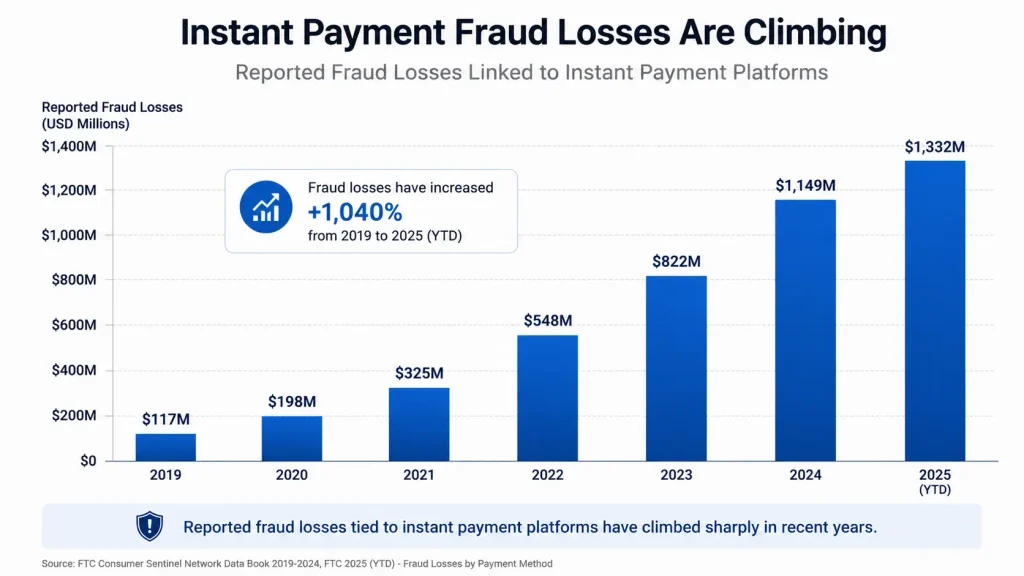
Investment scams and impersonation fraud accounted for a large portion of the 16.6 billion dollars in total fraud losses reported in the FBI’s 2024 Internet Crime Report, a 33 percent increase from the previous year. According to industry reporting, Zelle in particular has been linked to approximately 870 million dollars in reported fraud losses since tracking started in the middle of 2024. Separately, attempts at fraud in the payments industry as a whole increased by 89% in 2025; this increase has been partially attributed by researchers to more advanced, AI-assisted scam techniques.
Why Banks Handle Zelle and Instant Payment Scams Differently
FedNow and Zelle Scams Infrastructure is FedNow itself. Although the Federal Reserve constructed the infrastructure, it does not impose a uniform consumer protection standard for what happens when fraud takes place on top of it. Every bank establishes its own guidelines. Even though there isn’t a strict legal requirement to do so, some people willingly reimburse victims of authorized push payment scams out of a sense of customer trust. Others provide much less, leaving clients to bear the entire loss. Because of this discrepancy, your level of protection may be significantly influenced by the bank you choose to use rather than just what happened to you.
There are some signs that this might change. Future regulations requiring banks to reimburse authorized fraud in more situations, akin to what UK regulators have already done, have been suggested by industry analysts. There is currently no widespread mandate of this kind in the United States.
How to Protect Yourself From FedNow and Zelle Scams
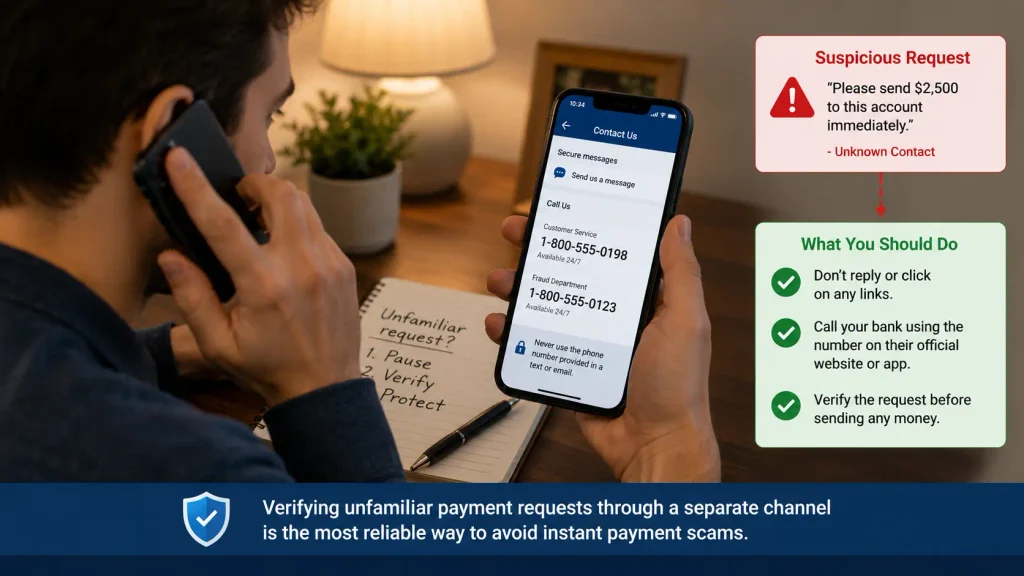
FedNow and Zelle Scams Any urgent request to transfer funds quickly should be viewed as a warning sign rather than an urgent matter that needs to be addressed right away, especially if it is presented as safeguarding your account from fraud. In order to keep your money safe, real banks usually don’t ask you to move it to another account. If you get a call or message like this, hang up and use the number on your card or the official bank app to get in touch with your bank instead of the number mentioned in the message.
FedNow and Zelle Scams Instead of depending solely on a text or email to confirm someone’s identity before sending money via an instant payment app to someone you have never paid before, use a different channel, such as a phone call or video chat. The best time to spot a scam is before you hit send, not after, because once an instant payment clears, recovery becomes very challenging.
Conclusion
The majority of transactions involving instant payments are entirely typical and secure, and they are a true convenience. The issue isn’t the technology per se; rather, it’s that consumer protection legislation hasn’t kept up with the actual misuse of these payments. Until that gap closes, identifying the particular pressure techniques scammers employ to get you to send the money yourself is the most dependable form of protection rather than a regulation.
FAQs
Am I protected if I get scammed using FedNow or Zelle?
FedNow and Zelle Scams It varies. Federal protections usually apply if someone steals your account credentials and transfers funds without your knowledge. Protection is much less certain and frequently depends on the policies of your particular bank if you are duped into personally approving the transfer.
What is authorized push payment fraud?
Authorized push payment fraud occurs when a scammer manipulates or deceives a person into voluntarily authorizing a payment to an account controlled by the fraudster. Unlike account hacking, the victim technically initiates or approves the transfer themselves.
Does Regulation E cover instant payment scams?
Unauthorized transfers in which your credentials were stolen are expressly covered by Regulation E. Situations where you were duped into approving the transfer yourself—the more prevalent scam pattern on instant payment platforms—are not explicitly covered by it.
Can I get my money back after an instant payment scam?
Since instant payments settle in seconds without a typical reversal window, it is challenging once a payment clears. It is still worthwhile to get in touch with your bank right away because some banks willingly look into or reimburse certain situations.
Are all banks required to refund instant payment fraud victims?
No. Since there is currently no broad federal mandate requiring reimbursement in these cases, each bank establishes its own policy regarding authorized push payment fraud.
How can I avoid becoming a victim of this type of scam?
Urgent requests to transfer your personal funds should be viewed as suspicious; unfamiliar payment requests should be verified via a different communication channel; and you should get in touch with your bank directly using their official contact details rather than any information found in a suspicious message.
Nasdaq delisting rules for small-cap investors
what the debasement trade means for investors
good information
thank you
[…] financial regulations explained […]