
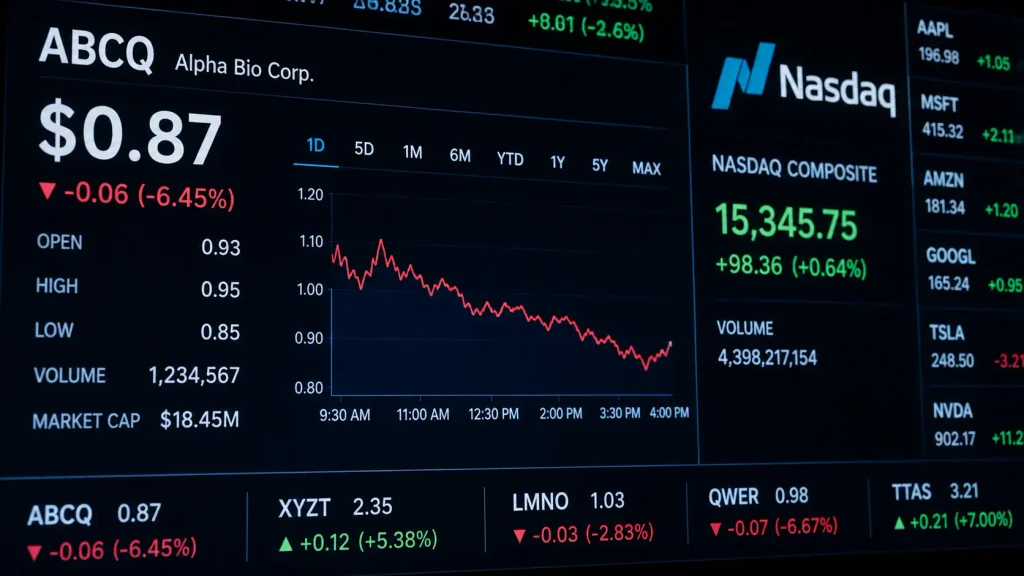
The safety net you might think exists is less if you own shares in a small-cap Nasdaq company that recently underwent a reverse stock split. Over the course of the last two years, Nasdaq has tightened its regulations regarding low-priced stocks. As a result, a company that falls below $1 now has significantly less time before being removed from the exchange than it did a few years ago.
The basic rule that has existed for years
Listed companies must maintain a closing bid price of at least $1 per share, according to Nasdaq regulations. The company receives an official deficiency notice and enters a compliance period, which is typically 180 calendar days, to raise the price back above $1 if a stock trades below that threshold for 30 consecutive business days. After that, some companies were eligible for a second 180-day period. This structure has been in place for a long time and has allowed struggling companies to either use a reverse stock split, which combines several existing shares into fewer, more expensive shares, to mechanically push the price back into compliance, or improve fundamentally.
What actually changed
Nasdaq eliminated that automatic grace period for a particular group of companies, those that had already used a reverse stock split within the previous year or that had used one or more reverse splits totaling a combined ratio of 250 to 1 or greater over the previous two years, beginning with rule changes that the SEC approved in January 2025. For those businesses, the typical 180-day cure window is not triggered if the price drops below $1 once more. Rather, Nasdaq starts the delisting procedure right away.
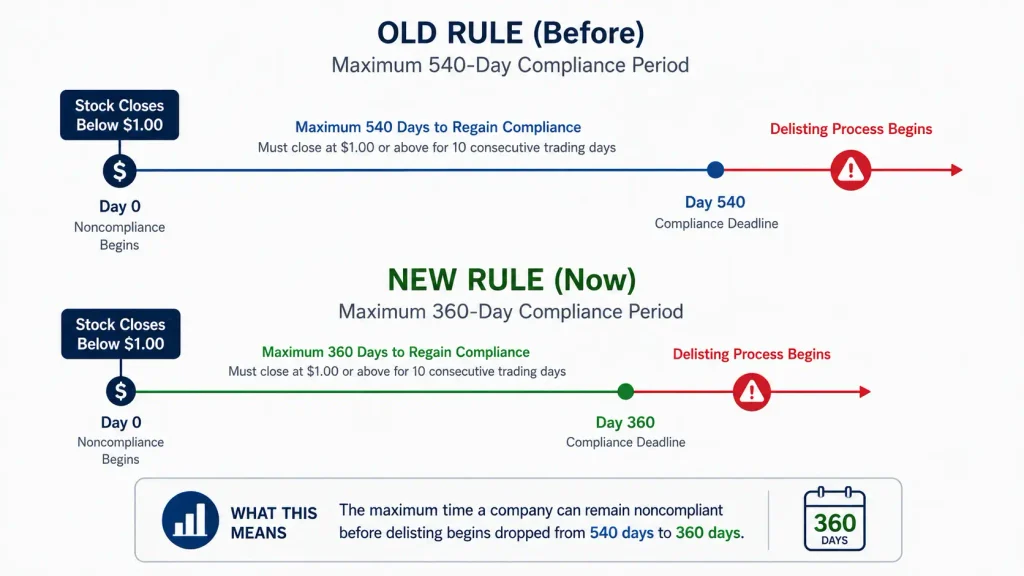
The overall timeline is also tightened by a related rule. Before delisting procedures actually started, a company could be in violation of the minimum bid price requirement for up to 540 days. That outer limit was lowered to 360 days under the current regulations.
Nasdaq provided a straightforward explanation for this to the SEC. The exchange claimed to have noticed a pattern among financially troubled companies that used frequent reverse stock splits, frequently in conjunction with dilutive new share issuances, as a means of formally adhering to listing regulations without resolving the underlying business issues that were causing the low share price. Nasdaq concluded that continuing to list these companies without stricter limits worked against investor protection rather than for it, characterizing this pattern as typically indicating deep financial or operational distress rather than a temporary dip.
The “cure and fail” trap
If you are attempting to determine the true position of a company, there is a particular technical nuance that you should be aware of. Even though the stock price technically moved back above a dollar, Nasdaq now treats a company that performs a reverse split specifically to address its bid price issue as having failed to regain compliance at all if the same reverse split causes the company to fall out of compliance with another Nasdaq requirement, typically the number of publicly held shares. Even if a reverse split appears to have resolved the issue on paper, the underlying listing risk may still exist.
A new requirement layered on top
A different new Nasdaq continued listing requirement, a minimum Market Value of Listed Securities, or MVLS, of $5 million, was approved by the SEC on July 22, 2026. This differs from the bid price rule in that it adds an additional financial floor that companies must pass in order to stay listed. According to one law firm’s description, this is a drawn-out approval process that attracted a lot of feedback from issuers, investor groups, and market participants. This, along with the stricter bid price regulations, is part of Nasdaq’s larger move away from technical, formula-based compliance measures and toward demanding actual financial substance.
Similar changes have been made to the New York Stock Exchange’s listing rules, which prohibit companies from utilizing the standard grace period if they have completed a reverse split within the last year or a split at a ratio of 200 to 1 or higher within the last two years. This indicates that the change is more widespread among major exchanges than it is a Nasdaq-specific policy decision.
Why this actually matters if you hold small cap stocks
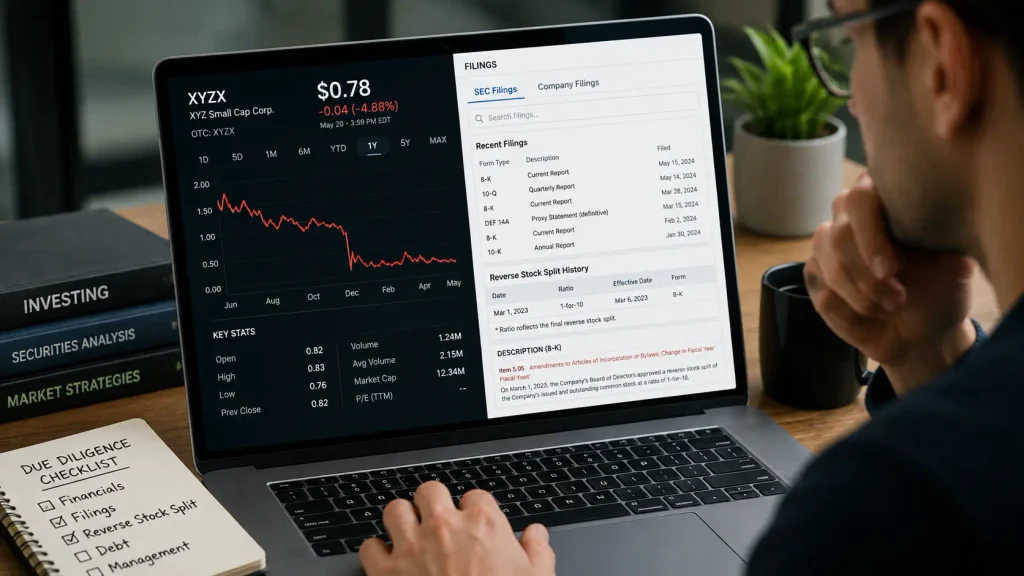
Reverse splits are not always cause for concern; many respectable businesses occasionally use them to comply with listing requirements while actually going through a brief difficult period. The margin for error has changed. The months of runway that were previously common are no longer available to a company that has already used a reverse split within the last year and then falls below a dollar once more. Checking for a recent reverse stock split in the company’s history is now a much more crucial due diligence step if you own a small cap Nasdaq stock because it directly affects how much protection is left in the event that the stock price declines once more.
Additionally, it is important to keep an eye out for dilutive share issuances in conjunction with a reverse split, as Nasdaq has identified this combination as a pattern linked to companies experiencing actual financial difficulties rather than a standard technical fix.
What actually happens if a stock gets delisted
Nasdaq delisting rules 2026
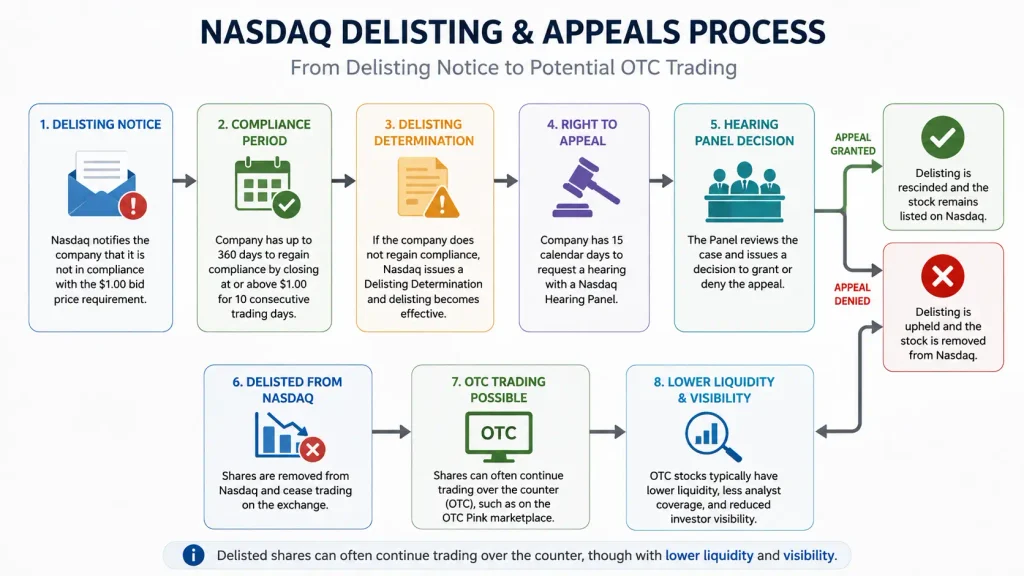
A stock does not always instantly become worthless or untradeable after being delisted from the Nasdaq. While a company appeals a delisting decision to Nasdaq’s hearings panel, shares can typically continue to trade on the over-the-counter market. The panel may give the company an extra 180 days to regain compliance while it is still listed. Even though the shares are still technically tradeable, switching to the over-the-counter market usually results in lower liquidity, wider bid ask spreads, and decreased visibility—all of which tend to work against current shareholders.
What to actually do with this information
Before assuming that a standard compliance timeline applies if the price declines, if you own or are considering a small cap Nasdaq stock, look for any reverse stock splits within the last year in its corporate filings or recent news. Under the current regulations, a company with a recent reverse split that is sitting close to or below a dollar once more carries significantly more immediate delisting risk than the same situation would have carried prior to 2025. more related ideas and images on our official Pinterest Profile
What the Nasdaq Rule Means:
$1 Minimum Bid PriceIn general, businesses are required to keep their closing bid price at least $1.
Split Restriction in Reverse
The typical cure period may be lost by some businesses that have recently undergone reverse splits.
360-Day Maximum
Certain bid-price deficiencies can now be resolved in a shorter amount of time.
$5 million MVLSA
minimum Market Value of Listed Securities requirement was added by Nasdaq.
Delisting Appeal
A delisting decision may be appealed by qualified businesses.
Conclusion
Nasdaq’s stricter delisting regulations were designed with a justifiable objective in mind: to weed out businesses that use frequent technical fixes to cover up actual financial difficulties rather than deal with them. For investors, this means that the presumption of a comfortable multi-month grace period no longer applies to a particular, recognizable group of businesses—those that have recently relied on a reverse split. The difference this rule change really makes is knowing which companies fit that description before you invest, instead of after you receive a delisting notice.
FAQs
What is Nasdaq’s minimum bid price requirement?
Listed companies must maintain a closing share price of at least $1, according to Nasdaq regulations. A formal deficiency notice is sent to the company if a stock trades below that for thirty consecutive business days.
Do companies still get 180 days to fix a low stock price?
No longer automatically. The typical 180-day grace period is no longer available to companies that have already completed a reverse stock split within the previous year or a combined ratio of 250 to 1 or more over the course of two years; instead, they are subject to immediate delisting procedures.
Does a reverse stock split always mean a company is in trouble?
Nasdaq has specifically identified a pattern of repeated reverse splits combined with dilutive share issuances as generally indicating deeper financial or operational distress, though this is not necessarily the case on its own.
What happens to my shares if a stock gets delisted from Nasdaq?
While a company appeals the delisting decision, shares can usually continue to trade over the counter, though visibility and liquidity are usually far lower than on the main exchange.
What is the new Market Value of Listed Securities requirement?
In addition to the current minimum bid price rule, a new Nasdaq continued listing requirement that was approved by the SEC in July 2026 requires listed companies to maintain a minimum total market value of listed securities of $5 million.
How can I check if a company I am invested in has done a recent reverse stock split?
Reverse stock splits are usually disclosed ahead of time by company press releases, SEC filings, and financial news coverage because Nasdaq regulations mandate public disclosure of the action prior to its implementation.
Has the New York Stock Exchange made similar changes?
Indeed. Additionally, companies that have completed a reverse split within the last year or a split of 200 to 1 or more within the last two years are prohibited from utilizing the NYSE’s standard compliance grace period. Nasdaq delisting rules 2026
awesome artical
thank you for your comment
thank you for your comment.
thank you for your comment v
informative
thank you for your comment..
useful information
thank you for your comment…
thank you for your comment…..
good post
thank you for your comment b
thank you for your comment
updated informative post
thank you for your comment
ohhhhhh!
thank you for your comment
useful informative
thank you
[…] Nasdaq delisting rules for small-cap investors […]
useful information
[…] Nasdaq delisting rules for small-cap investors […]
[…] Nasdaq delisting rules for small-cap investors […]