
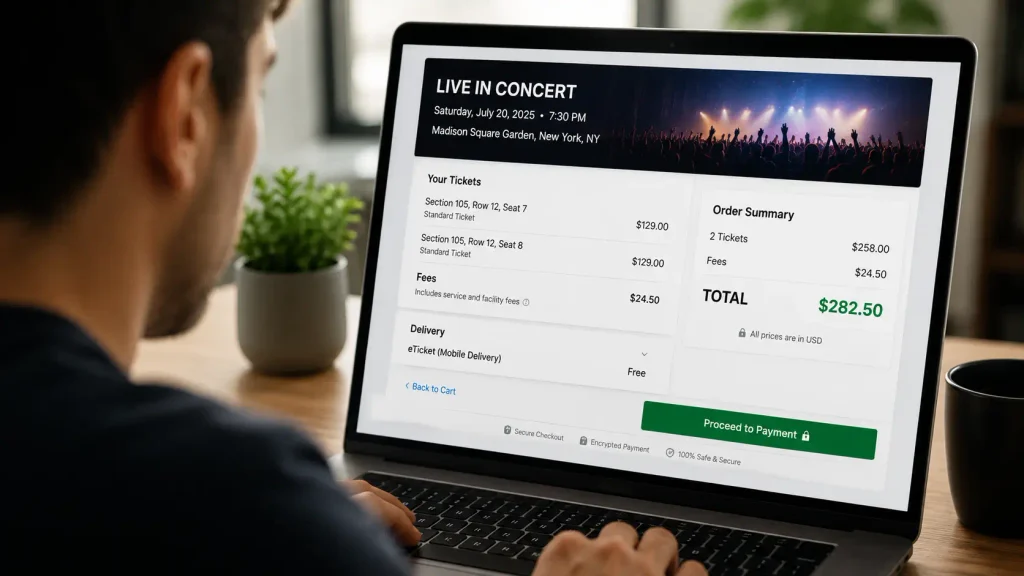
Many assumed that hidden ticket and hotel fees had simply disappeared after hearing that junk fees had been outlawed. They have not vanished. In actuality, sellers are now required to display the entire price up front rather than adding fees at the point of sale. The actual fees may still be as high as they were previously. That distinction is important, and it’s important to know exactly what protection this rule offers and does not.
What Does the FTC Junk Fee Rule Actually Require?
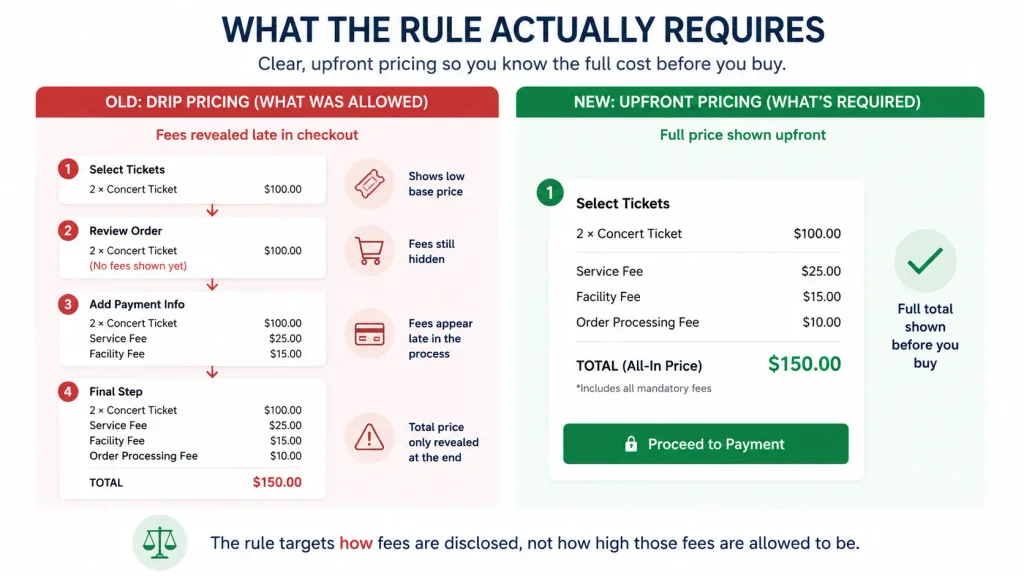
Tickets for live events and short-term accommodations, such as hotels and vacation rentals, are covered by the FTC’s Rule on Unfair or Deceptive Fees, which went into effect on May 12, 2025. Drip pricing, which advertizes a low base price and only discloses required fees at checkout, is prohibited. Any company that offers, displays, or advertizes a price for these goods is required by law to display the entire cost, including all required fees, from the moment the price first appears, not multiple screens into the purchase process.
FT C Junk Fee RuleThe amount that a business can charge is not governed by the rule. Service fees, resort fees, and convenience fees can still be set at any level by a venue or platform. It is unable to conceal those costs until the very end of the checkout process. Given that the rule is sometimes referred to as a “junk fee ban,” it is easy to overlook the fact that this is a disclosure requirement rather than a price cap.
FTC Junk Fee Rule Enforcement: What Has Happened So Far?
This is not a rule that the FTC wrote and then ignored. StubHub agreed to pay $10 million in April 2026 to resolve claims that it neglected to reveal complete ticket prices during a three-day window immediately prior to the release of the 2025 NFL schedule, a time when ticket sales were in high demand. StubHub was required to identify and reimburse eligible customers who purchased tickets during that particular window; they were not required to submit a claim. Separately, Live Nation and Ticketmaster were sued by the FTC and seven states in September 2025 for allegedly engaging in drip pricing practices prior to the rule. The lawsuit is still pending after the companies attempted to have it dismissed in January 2026.
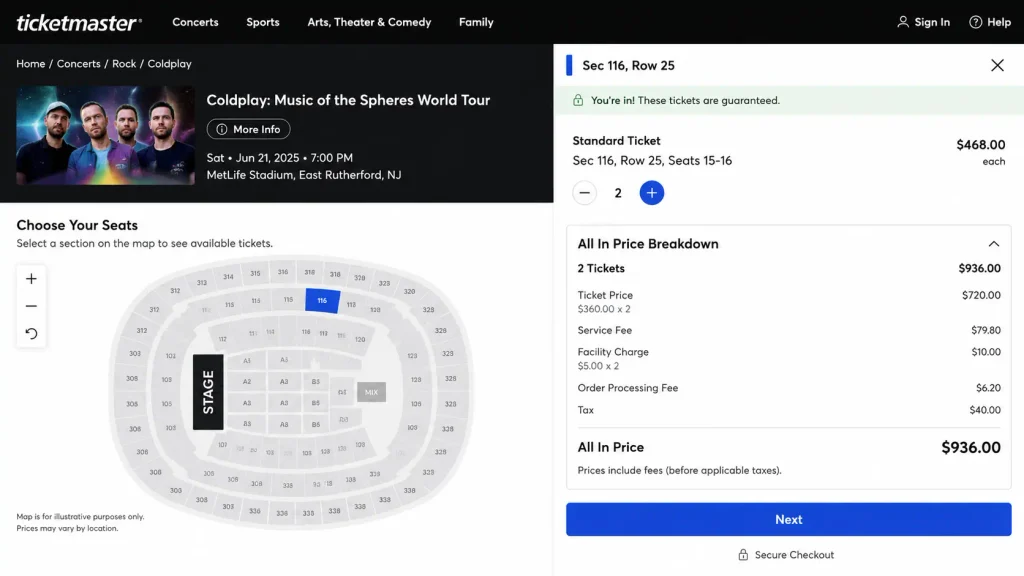
In response to the pressure brought on by this rule and the related lawsuits, Ticketmaster has since introduced what it refers to as All In Prices, which displays the entire cost of the ticket, including fees before tax and shipping.
What the FTC Junk Fee Rule Does Not Cover
Short-term lodging and tickets to live events are specifically covered by the rule. Although the FTC has stated that it will continue to pursue deceptive pricing cases in other industries through its general enforcement authority rather than this particular rule, it does not cover other industries where hidden fees are common, bank overdraft charges, certain telecom fees, or add-on charges in other retail categories. Protection may differ slightly depending on where you live because a number of states have enacted their own all-in pricing laws that go beyond or apply more broadly than the federal rule.
Additionally, enforcement has been inconsistent. The FTC has pursued a few high-profile cases, but with thousands of online ticket sellers, hotels, and vacation rental platforms, it is impractical to enforce the law throughout the whole market, and there are probably still gaps in compliance.
What Should Consumers Do About Hidden Fees?
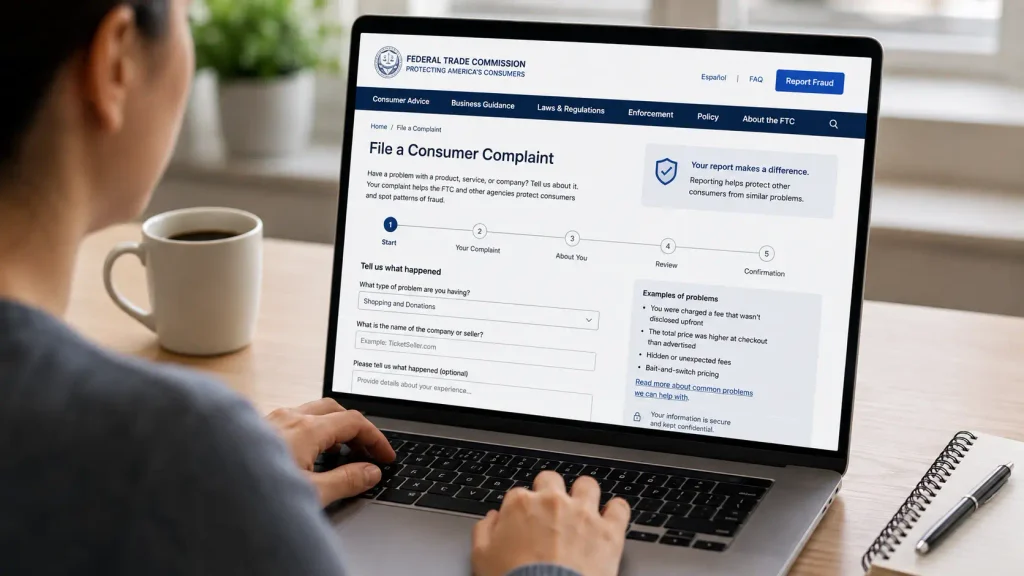
Even though sellers are now legally obligated to display it that way, don’t assume that every ticket or hotel price you see today is the actual final price. Since the FTC uses consumer complaints to determine which businesses to look into, if you see a fee that was not included in the advertized total price, it may be a rule violation worth reporting directly to the agency via its complaint portal. A fully disclosed fee may still be substantial, and comparison shopping based on total price rather than just the advertized starting price continues to be the more dependable method of actually finding the better deal. It also helps to set more reasonable expectations because this rule regulates disclosure rather than the fee amount itself.
FAQs
Does the FTC’s junk fee rule actually ban high service fees?
No. It mandates that sellers reveal the entire cost up front, including any required fees. It does not restrict or cap the amount of fees that a business can charge.
What industries does the junk fee rule cover?
Tickets for live events and short-term accommodations, such as hotels and vacation rentals, are currently covered. Other industries, such as banking or telecom fees, are not covered.
What happened with the StubHub settlement?
In order to resolve FTC accusations that it neglected to disclose full ticket prices during a particular three-day window in May 2025, StubHub agreed to pay $10 million in April 2026; eligible customers will receive an automatic refund.
Is the Live Nation and Ticketmaster lawsuit still ongoing?
Indeed. Due to alleged drip pricing, the FTC and seven states sued the companies in September 2025. A motion to dismiss was filed in January 2026, but the case is still pending.
What should I do if I see a hidden fee added at checkout?
The FTC uses its consumer complaint system to find patterns of noncompliance and target enforcement, so you can report it directly to the agency.
Do all states follow the same rules as the federal junk fee rule?
that may be more expansive than the federal regulation.
Does this rule mean tickets and hotel rooms are now cheaper?
FTC Junk Fee Rule Not always. The rule does not reduce the total price a seller is permitted to charge, but it does increase price transparency by requiring the entire cost up front.