
Russia Ukraine War, As the war between Russia and Ukraine enters its fifth year, fighting on the ground has continued largely unabated even as diplomatic efforts to end it have picked up pace in recent weeks. Here is where things stand as of late September 2026.
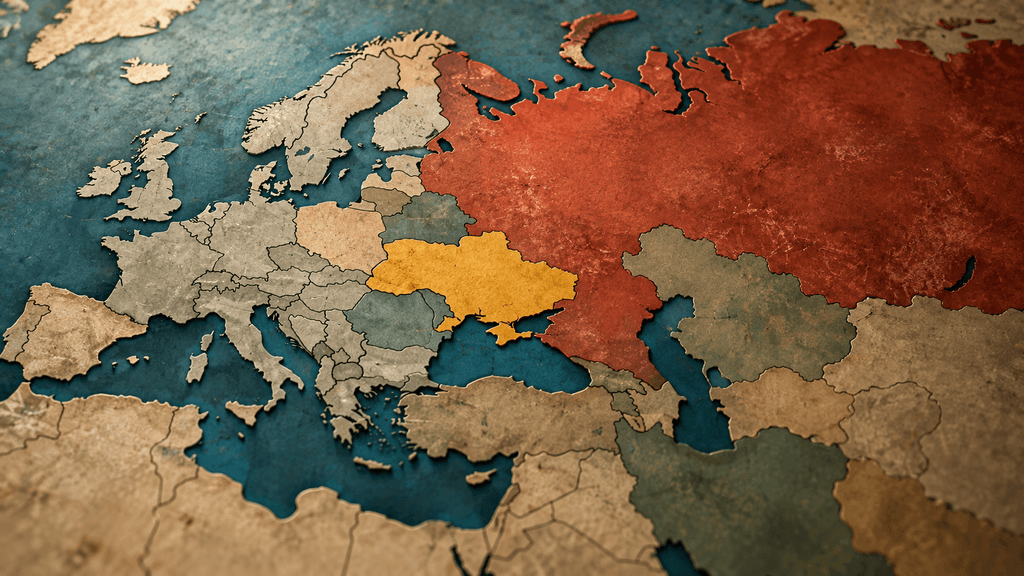
The Front Lines Have Barely Moved
Despite years of fighting, territorial gains on either side have slowed considerably compared with the war’s earlier phases. According to Ukraine’s DeepState monitoring group, Russia made a net gain of roughly 37 square miles of Ukrainian territory over the four weeks ending September 22, concentrated mostly in the eastern Donetsk region, including the settlement of Markove and advances near several nearby villages. A separate analysis using data from the Institute for the Study of War put Russia’s net gain over the same period at closer to one square mile, illustrating how difficult it is to get a precise, agreed upon picture of the front line even for organizations tracking it closely and continuously.
Ukrainian forces have not been standing still either. Over the same period, Ukraine reported liberating several settlements and pushing Russian lines back in parts of the Donetsk region. Near the town of Dobropillia, Ukrainian forces say they remain in control despite Russian claims of an encirclement, a discrepancy that reflects how contested even basic facts about the war’s progress can be, with each side’s claims often needing independent verification before they can be treated as confirmed.
Strikes on civilian and infrastructure targets have continued on both sides. In late September, Russian drone and missile attacks hit the city of Zaporizhzhia, including a strike on a local market, and a separate barrage hit the city of Sumy, with officials reporting casualties including a child. Ukrainian strikes have hit targets inside Russian occupied territory and inside Russia itself, including an oil refinery in the Krasnodar region and a facility reportedly producing missile and artillery components. A data center was also reportedly struck twice in the same week, disrupting services.
A Renewed Push for Ceasefire Talks
The most notable recent development is not on the battlefield but at the negotiating table. The United States has been pushing to revive stalled ceasefire talks, with reports of a planned return to trilateral discussions involving Washington, Kyiv, and Moscow. Russian President Vladimir Putin said this week that proposals for ending the fighting remain on the table, though he said Moscow still needs to weigh what serves its own interests before proceeding. He also said Russia was prepared to resume negotiations following recent Russian parliamentary elections, while accusing Ukraine of launching attacks on Moscow and on polling stations during that period.

Ukrainian officials, for their part, say Kyiv is ready for a ceasefire and have accused Russia of repeatedly finding reasons to delay one. Both sides continue to hold firm on core positions that have blocked a deal for years. Russia has said it wants Ukraine to cede occupied territory, scale back its military, and abandon its bid to join NATO. Ukraine and its Western backers have rejected those terms as unacceptable, and the US stance in these talks has itself drawn criticism from some quarters for appearing to favor elements of Russia’s position
Russian officials have also met separately with American counterparts in recent days, reportedly to discuss potential economic cooperation rather than the war itself, a sign that economic and diplomatic tracks are being pursued alongside each other even as fighting continues you can steam the detailed audio version of this topic directly on podbean.
Where Ukrainian Public Opinion Stands
Domestically, Ukrainian public sentiment continues to favor continued resistance over concessions. Recent polling found that among Ukrainians who trust President Volodymyr Zelenskyy, roughly 89 percent support continuing armed resistance, while only about 5 percent said they were ready to accept a peace deal on any terms, with the remainder undecided. That figure offers some insight into why a rapid settlement remains difficult even as diplomatic channels reopen. Zelenskyy has also continued to press Western allies to maintain economic pressure on Russia, warning that what he has called Russia’s never ending war could eventually spread beyond Ukraine’s borders if left unchecked.
The Human Toll
Tracking exact casualty figures in an active war is notoriously difficult, and estimates vary widely depending on the source. The United Nations has documented more than 16,800 civilian deaths in Ukraine since the war began, a figure widely considered to be an undercount given the challenges of verifying deaths in active combat zones and occupied territory. Conditions in some occupied areas have also drawn concern, with reports describing severe food shortages in the Russian occupied town of Oleshky, where residents have reportedly resorted to foraging for grass and weeds to survive.
Military casualty estimates are far less precise. Some Western officials have put combined military casualties, killed and wounded, on both sides at well over a million, with figures cited around 1,000,000 for Russia and 250,000 to 300,000 for Ukraine as of early 2026 estimates. These numbers come from unofficial assessments shared by former officials rather than confirmed government data, and both Moscow and Kyiv have strong incentives to understate their own losses publicly, so any single figure should be treated as a rough estimate rather than a verified count.
Global Pressure and the Economic Front
Beyond the battlefield, economic pressure remains one of the primary tools Western governments are using to influence the war’s trajectory. Zelenskyy has continued to urge allies to tighten restrictions on Russian revenue sources, particularly energy exports, arguing that sustained economic pressure is as important to ending the war as diplomatic talks or battlefield outcomes. Officials have also raised concerns about third party support for Russia’s war effort, criticizing North Korea’s continued military assistance to Moscow.
What to Watch Next
With renewed diplomatic engagement but no finalized agreement, the coming weeks are likely to bring more talk of negotiations without a guaranteed breakthrough. Watch for whether the reported trilateral talks involving the US, Ukraine, and Russia actually materialize, and whether either side shows any real flexibility on the core sticking points that have blocked a deal for years, namely territory, NATO membership, and the size of Ukraine’s future military. Given how quickly the situation on the ground and at the negotiating table can shift, anyone following closely is better served checking a live, continuously updated source rather than relying on a single snapshot in time.
FAQ
What is the current status of the Russia Ukraine war as of September 2026?
The war remains active, with only small territorial changes on either side in recent weeks. Diplomatic efforts to revive ceasefire talks have picked up, involving the United States, Ukraine, and Russia, though no agreement has been reached.
Are Russia and Ukraine currently in ceasefire talks?
Reports indicate the US has been pushing to revive stalled trilateral talks between Washington, Kyiv, and Moscow. Russian President Vladimir Putin has said proposals remain on the table, while Ukrainian officials say Kyiv is ready for a ceasefire.
How many people have died in the Russia Ukraine war?
The United Nations has documented more than 16,800 civilian deaths in Ukraine, a figure believed to be an undercount. Military casualty estimates are far less precise, with some unofficial Western estimates placing combined casualties on both sides well over a million.
What are Russia’s conditions for ending the war?
Russia has said it wants Ukraine to cede occupied territory, reduce the size of its military, and abandon its bid to join NATO. Ukraine and its Western allies have rejected these terms.
Do Ukrainians support continuing the war?
Recent polling found that among Ukrainians who trust President Zelenskyy, about 89 percent favor continuing armed resistance, while roughly 5 percent said they would accept a peace deal on any terms.
Where can I find real time updates on the Russia Ukraine war?
Because the situation changes quickly, a live, continuously updated source such as a major wire service or a dedicated conflict tracker is more reliable than a single article for the latest developments.