
North Korea Nuclear Status Irreversible, used its platform at the United Nations General Assembly this week to declare its status as a nuclear armed state permanently settled, rejecting any prospect of denuclearization talks. The declaration landed alongside a separate and more immediate flashpoint closer to home, a landmine explosion along the Demilitarized Zone that wounded three South Korean soldiers and that investigators say was likely North Korean in origin.
North Korea’s Declaration at the UN
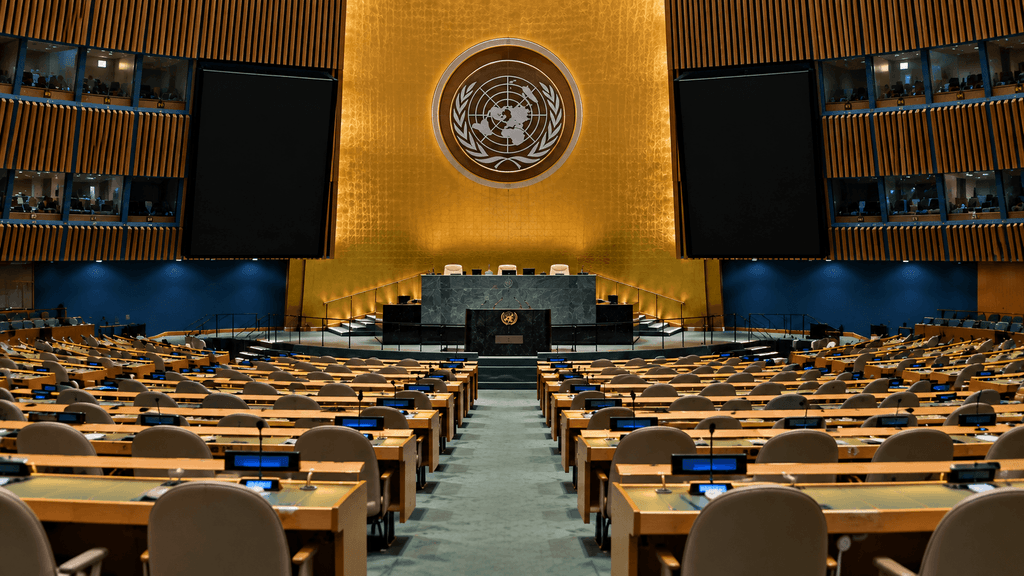
Speaking during the General Assembly’s general debate on Monday, North Korean Vice Foreign Minister Kim Son Gyong told delegates that her country’s status as a nuclear weapons state can never be reversed under any circumstances or by any means. The remark was widely read as a direct rejection of renewed calls from the United States, South Korea, and Japan for North Korea to give up its nuclear arsenal.
Kim paired that declaration with pointed criticism of recent military developments on the Korean Peninsula. She accused Washington of turning its military alliance with Seoul and Tokyo into a more offensive and aggressive bloc aimed squarely at North Korea, citing joint US led military exercises, South Korea’s pursuit of nuclear powered submarines, and what she described as Japan using global instability as cover to accelerate its own rearmament. She also criticized the United Nations more broadly, arguing the institution has failed to fulfill its responsibilities due to what she called high handedness and unilateralism by a small number of member states, and called for greater adherence to the founding principles of the UN Charter, framing respect for national sovereignty and development rights as essential to resolving current global tensions If you prefer listening on the go on these articals you can tune into our full episode on spotify podcast.
South Korea’s Notably Different Tone
South Korean President Lee Jae-myung also addressed the General Assembly this month, and his remarks were notable as much for what he left out as for what he included. Unlike past South Korean addresses to the UN, Lee did not repeat the customary demand for complete, verifiable, and irreversible denuclearization, a formulation commonly referred to by the acronym CVID that has anchored South Korea’s official position for years. Observers have read the omission as a tacit acknowledgment that North Korea has no intention of giving up its nuclear weapons regardless of outside pressure, a shift in tone that reflects the practical reality Kim’s UN remarks were reinforcing, even if it does not represent a formal change in South Korea’s stated policy.
A Landmine Blast Complicates Any Path to Dialogue
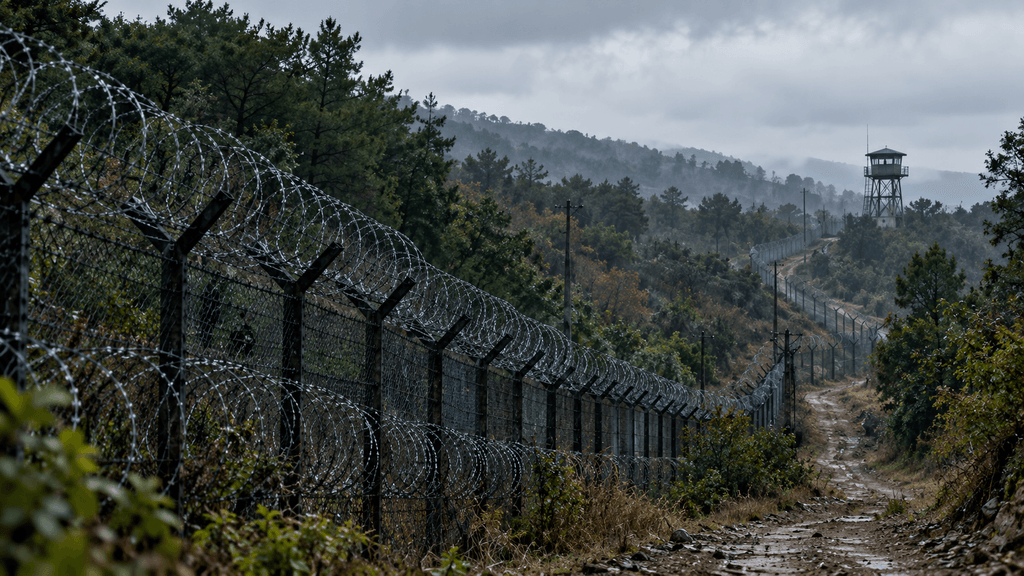
Any hope Lee has held for renewed dialogue with Pyongyang took a further hit this week following a landmine explosion along the western section of the DMZ. Three South Korean soldiers were wounded while patrolling a known route just south of the Military Demarcation Line, the boundary separating North and South Korean forces. South Korea’s military announced this week that its investigation found the explosion was highly likely caused by a North Korean landmine, placing responsibility for the incident on Pyongyang.
Not every assessment has been uniform. At least one outside technical analysis suggested a lower likelihood that the mine had shifted position naturally over time and pointed instead toward a possible connection to routine border fortification work, a reminder that determining exact causes in the DMZ’s terrain is not always straightforward even for experienced investigators. South Korea’s National Assembly was scheduled to hold an emergency questioning session with the Ministry of National Defense on Monday, with lawmakers from both the ruling and opposition parties pressing for further answers about the incident and the military’s response.
Why the DMZ Remains So Dangerous
The incident is a reminder of just how hazardous the DMZ remains more than seven decades after the Korean War armistice. The zone stretches roughly two and a half miles wide and is patrolled only by small foot patrols operating on their respective sides of the demarcation line. In many places the boundary itself is poorly marked, and much of the terrain is heavily overgrown and still extensively mined from decades of military standoff, which forces troops to stick closely to a limited number of well established and frequently checked patrol routes rather than moving freely through the area. That combination of unclear boundaries, difficult terrain, and old ordnance makes incidents like this week’s explosion a persistent risk even during periods without active conflict.
The Bigger Regional Picture
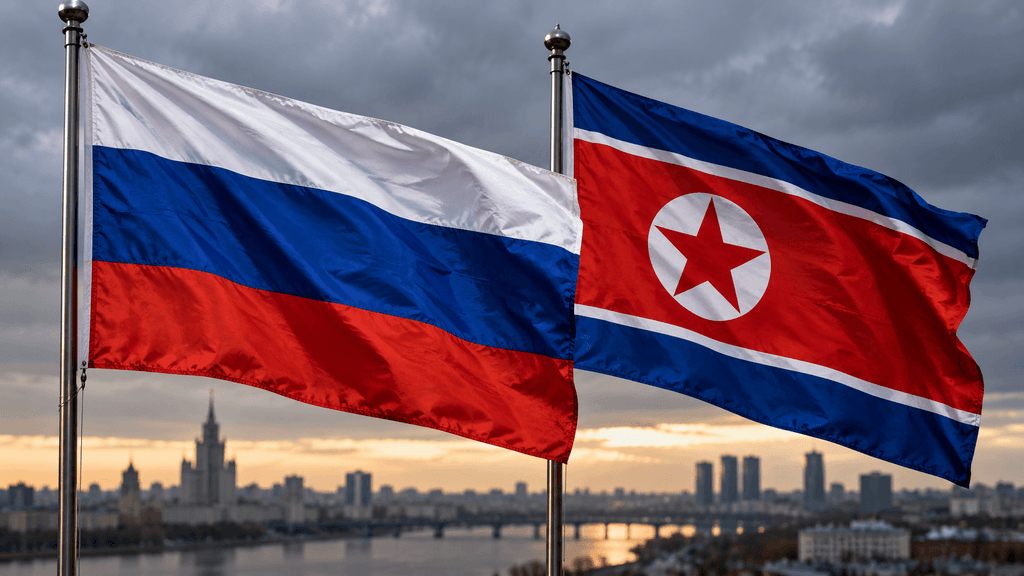
North Korea’s declaration and the DMZ incident are unfolding alongside a broader pattern of North Korean military assertiveness beyond the peninsula itself. Ukrainian President Volodymyr Zelensky said this month that North Korea is preparing to send an additional 10,000 troops to support Russia’s war effort, on top of roughly 8,000 North Korean soldiers already reported to be deployed there. Taken together with this week’s UN declaration and the DMZ incident, the picture that emerges is one of a North Korean government leaning further into its military posture on multiple fronts simultaneously, rather than showing any sign of pulling back.
North Korea Nuclear Status Irreversible
What to Watch Next
With North Korea now stating its nuclear status as settled and permanent, and South Korea’s own rhetoric shifting away from its longstanding denuclearization demand, the diplomatic path forward between the two Koreas looks considerably narrower than it did even a few months ago. Monday’s emergency questioning session in South Korea’s National Assembly may offer more detail on the landmine investigation specifically, though it is unlikely to resolve the larger and more difficult question of what, if anything, comes next in the broader relationship between the two governments.
FAQ
Did North Korea say its nuclear weapons program is permanent?
Yes. North Korean Vice Foreign Minister Kim Son Gyong told the UN General Assembly this week that the country’s status as a nuclear weapons state can never be reversed under any circumstances, rejecting calls for denuclearization.
Why did North Korea criticize South Korea at the UN?
Kim criticized South Korea’s pursuit of nuclear powered submarines and accused the United States of turning its military alliance with South Korea and Japan into a more aggressive bloc aimed at North Korea.
Did South Korea’s president respond to North Korea’s nuclear stance?
South Korean President Lee Jae-myung addressed the UN around the same time and notably did not repeat the country’s usual demand for complete, verifiable, and irreversible denuclearization, a shift many observers read as an acknowledgment that North Korea will not give up its weapons.
What happened at the DMZ this week?
A landmine explosion along the western section of the Demilitarized Zone wounded three South Korean soldiers during a routine patrol. South Korea’s military investigation found the mine was highly likely of North Korean origin.
Is North Korea sending more troops to Russia?
Ukrainian President Volodymyr Zelensky said this month that North Korea is preparing to send an additional 10,000 troops to support Russia’s war effort, adding to roughly 8,000 already reported to be deployed there.
Why is the DMZ still dangerous today?
The DMZ remains heavily mined and poorly marked in places, more than seventy years after the Korean War armistice, forcing patrols on both sides to stick to a limited number of known, regularly checked routes.