
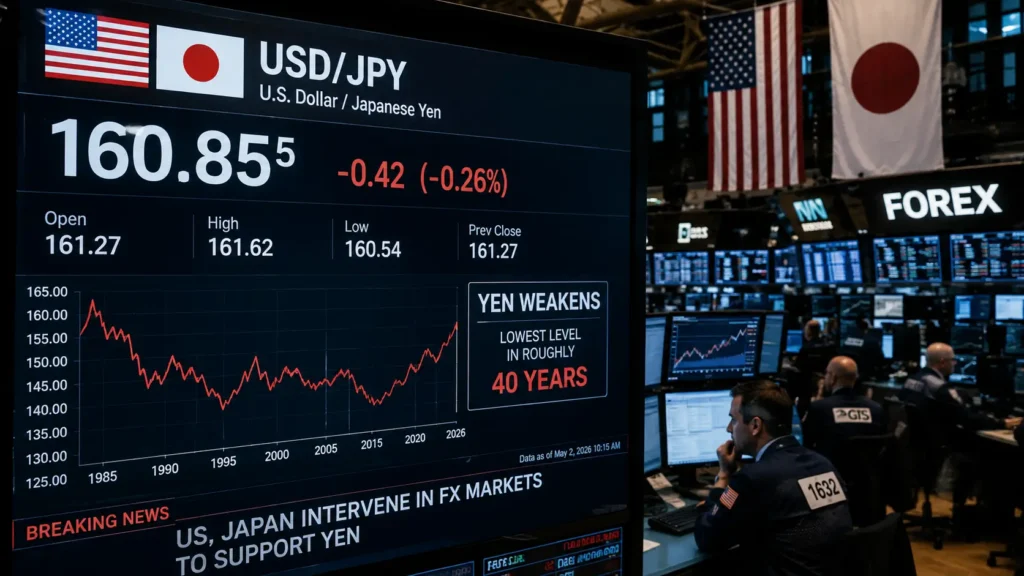
The Japanese yen is not widely used. However, it fell to its lowest level against the dollar in roughly 40 years last week, and Japan and the United States intervened jointly on Friday to halt the decline. It has been years since such a cooperative effort took place. It affects things that many Americans already own or intend to do, from index funds to a trip to Japan, and it matters far beyond Tokyo trading floors.
How Bad Did the Yen Get
The yen fell to roughly 163.7 per dollar last Thursday, its weakest point since the mid 1980s. On Monday, Japan’s Ministry of Finance acknowledged that it had worked with the US Treasury to arrange a yen purchasing operation on Friday. According to reports, Tokyo supported the currency by spending nearly 5.3 trillion yen, or roughly 34 billion dollars. In a matter of days, the action caused the yen to rise once more to between 156 and 157 per dollar.
The intervention was aimed at “excessive volatility and disorderly movements” in the currency, according to Finance Minister Satsuki Katayama, and Japan would take further action if necessary.
Why the Yen Kept Falling in the First Place
Even after the Bank of Japan increased its policy rate to 1 percent in June, the highest level since 1995, interest rates in Japan have remained significantly lower than those in the US. That is still significantly lower than the benchmark rate set by the US Federal Reserve, which is near 3.75 percent.
When interest rates in one country are significantly higher than those in another, investors typically borrow money in the currency with lower interest rates and invest it in areas with higher returns. We refer to this as a carry trade. Traders take out inexpensive yen loans, exchange them for dollars, and invest the money in US assets. One of the main reasons the yen continued to lose value was the continuous selling of the currency. Since Japan imports almost all of its energy, rising oil prices linked to the Iranian conflict increased pressure.
Why the US Got Involved
The yen’s decline is not just a Japanese issue. One of the biggest foreign investors in US Treasury bonds is Japan. US borrowing costs might increase if a weakening yen compelled Japanese investors or the government to sell those Treasuries in order to protect the currency. This risk has been cited by analysts at Oxford Economics and other firms as one of the reasons Washington decided to take part directly rather than observe from the sidelines.
A political aspect is also present. Rising import prices in Japan have put pressure on households and damaged Prime Minister Sanae Takaichi’s popularity. To alleviate the burden on families, her government has already suggested lowering the food consumption tax from 8% to 1% for two years beginning in 2027.
What This Means for Your Retirement Account
Unbeknownst to the account holder, many regular retirement portfolios are exposed to Japan. Given that Japan has the third-largest stock market in the world, international index funds, total world stock funds, and target date retirement funds usually hold a significant portion of Japanese stocks. Even if the underlying Japanese companies are doing well, those holdings may experience short-term volatility due to a sudden, chaotic currency move.
This does not imply that fear is justified. Long-term holding periods tend to average out currency fluctuations, and investors are shielded from single-country shocks like this one by diversification. To ensure that the exposure is not unexpected, it is still worthwhile to verify the foreign allocation in a retirement account.
What This Means for Prices and Travel
American consumers can purchase Japanese goods at a lower cost due to the weakening yen. One reason Japanese automakers have persevered in the face of international trade tensions is that cars, electronics, and gaming hardware made in Japan or priced against the yen can become more competitive compared to other imports. On the other hand, some of that pricing advantage may eventually disappear if the currency appreciates significantly as a result of this intervention, though the impact on retail prices is typically gradual and negligible in comparison to other cost factors like tariffs and shipping.
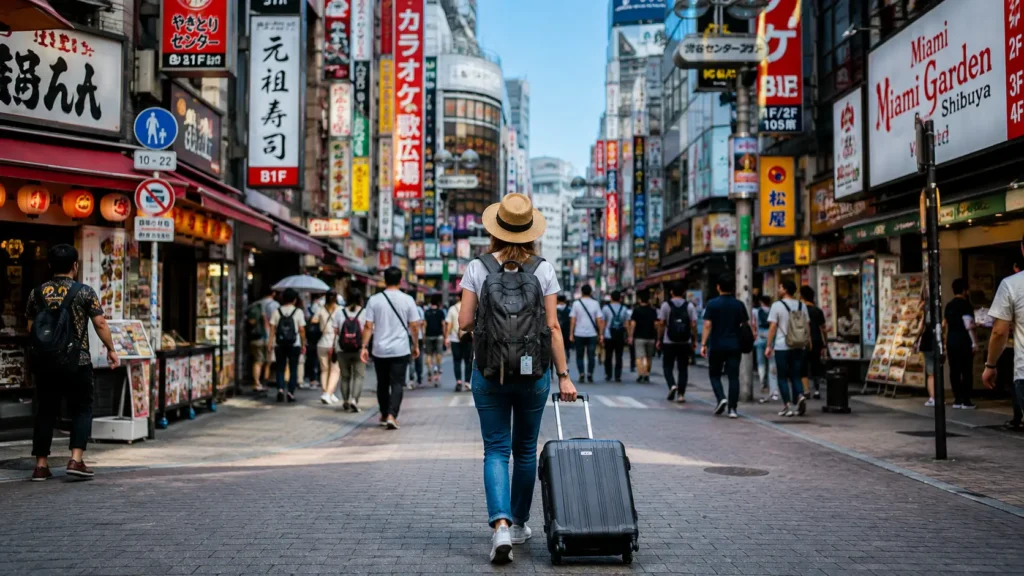
The image is more immediate for tourists. Japan has become one of the most affordable major travel destinations for Americans in decades due to a declining value of the yen, and tourism there has increased as a result. Hotel rooms, meals, and shopping in Japan would progressively cost more in dollars if the intervention is successful in making the yen significantly stronger over the next few months. Although it is genuinely uncertain how far or how quickly the yen moves from here, anyone planning a trip might want to book major expenses as soon as possible.
What Happens Next
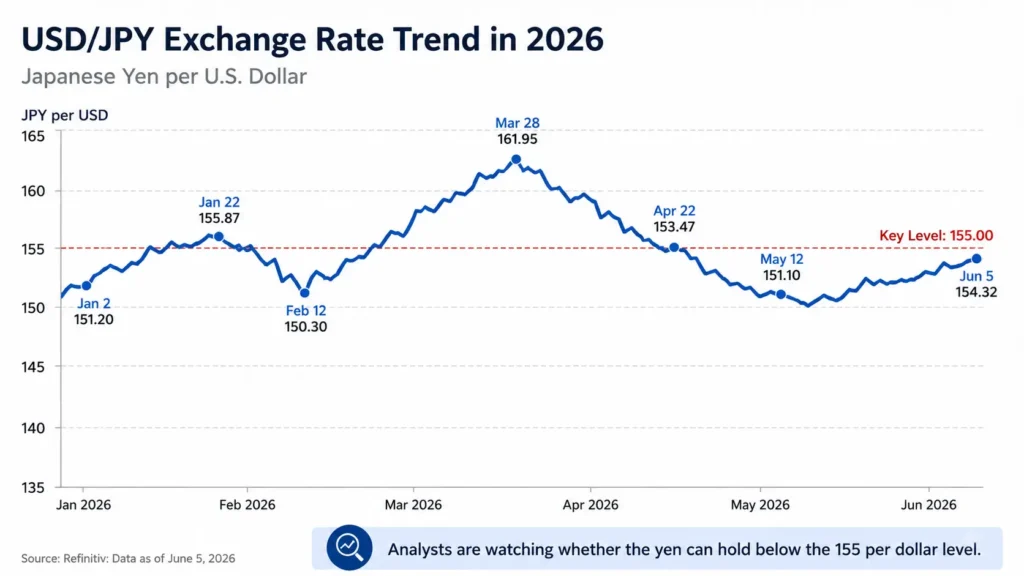
Strategists are keeping an eye on the yen’s ability to stay below 155 per dollar, which some analysts believe will be the next significant test of the intervention’s long-term viability. The majority concur that intervention is only a temporary solution. A long-term recovery would probably necessitate either a change in the large disparity between US and Japanese borrowing costs or the Bank of Japan continuing to raise rates, which it has been moving cautiously toward.
Conclusion
This is more than just a tale of New York and Tokyo traders. The amount in a 401(k), the price of a plane ticket to Osaka next spring, and the current interactions between oil, interest rates, and international bond markets are all related to a currency that most Americans never consider. Instead of closing the underlying interest rate gap that was the root of the issue, the intervention has bought time. There is a good reason for anyone with exposure to foreign funds or plans to visit Japan to monitor the yen’s future movements.
FAQs
To put it simply, what is the yen carry trade? It occurs when investors take out loans in the yen, a currency with low interest rates, and use them to purchase assets valued in currencies with higher rates, like the dollar. The yen’s value is under pressure to decline due to this ongoing borrowing and selling.
Why did the United States assist Japan in protecting its currency? In addition to a general desire to avoid chaos in the world’s currency and bond markets, officials and analysts cited worries that a collapsing yen might force Japan to sell US Treasury bonds, which would increase US borrowing costs.
Even if I don’t make direct investments in Japan, will a weak yen still have an impact on my 401(k)? Currency fluctuations can affect account values even in the absence of a direct option to invest in Japan because many retirement funds, such as international index funds and target date funds, hold Japanese stocks as part of broad diversification.
Will my next trip to Japan cost more because of the yen intervention? Costs in Japan would progressively increase in terms of dollars if the yen strengthened significantly over time. Traveling there is still relatively cheap because the currency is still historically weak.
How long do currency interventions typically last? In the past, interventions have typically provided a short-term boost rather than a long-term solution. A sustained change, according to the majority of economists, necessitates changes in underlying interest rate policy rather than merely one-time currency purchases.
Is this the first instance of joint US and Japanese intervention? According to reports, this is the first coordinated US currency intervention in Japan in many years. However, sources vary on the precise previous comparison; some point to coordinated action in 1998, while others mention joint G7 efforts in 2011. Reports are still working to clarify the precise historical framing.
Could this have an impact on US prices for Japanese automobiles and electronics? In general, Japanese exports are now more competitively priced due to the weakening yen. Although pricing is also heavily influenced by tariffs, shipping costs, and demand, that advantage may eventually wane if the yen appreciates.