

tariff refunds
There’s a good chance that a tariff was included in the price you paid if you purchased anything imported during the previous year, including a car, a phone, and basic household items. A significant portion of those tariffs were declared unlawful by the Supreme Court in February. The federal refund process is currently processing up to 175 billion dollars.
The fact that almost none of it will end up in the hands of the average consumer reveals a lot about how tariffs actually operate.
What the Supreme Court actually decided
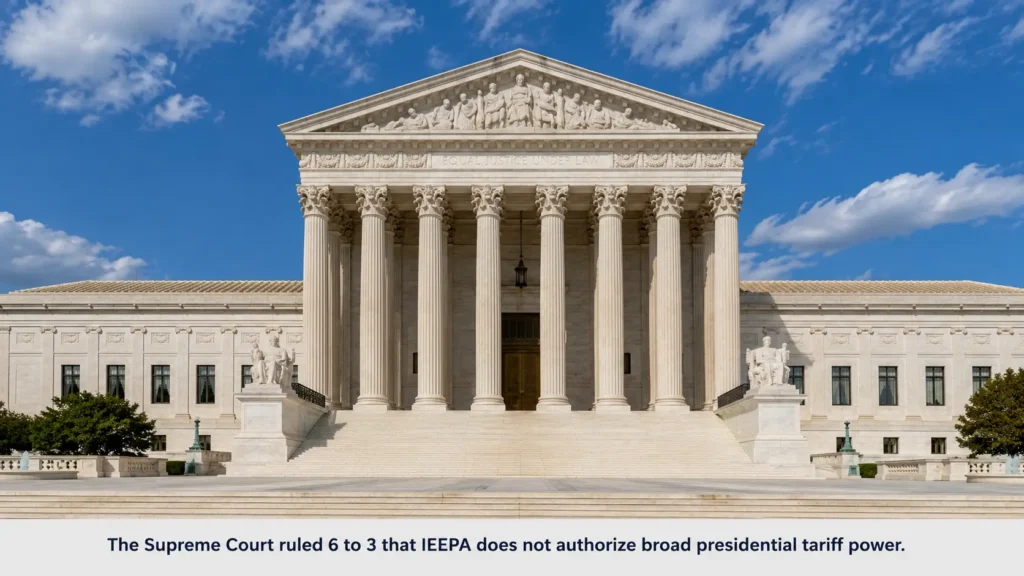
The International Emergency Economic Powers Act does not grant the president the power to impose broad tariffs, the Supreme Court ruled 6 to 3 on February 20, 2026. The original purpose of the law was to allow the president to implement targeted economic measures in response to declared national emergencies, rather than to establish long-term trade policy thru general import taxes. The decision covered a wide range of tariffs implemented since early 2025, such as the 10% worldwide tariff imposed in February of that year, tariffs linked to fentanyl trafficking issues on products from China, Canada, and Mexico, and additional tariffs imposed on Indian imports due to the nation’s purchases of Russian oil.
It’s important to be clear about what the decision did not address. Tariffs imposed under other legal authorities, such as Section 232 tariffs on steel, aluminum, and automobiles and Section 301 tariffs on Chinese goods, are still in full force. The only tariffs that were overturned were those based on IEEPA.
Where the refund money is actually going
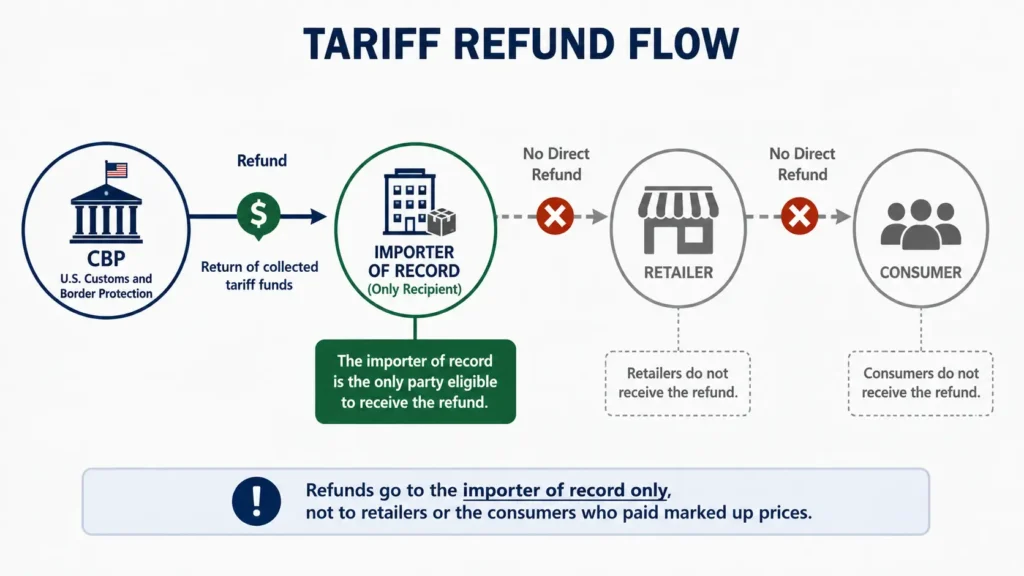
Based on IEEPA duty collections that had already reached approximately 133 billion dollars by mid-December 2025, the Penn Wharton Budget Model estimates that the decision could result in refunds of up to 175 billion dollars. In April 2026, Customs and Border Protection launched a new processing module called CAPE inside its current ACE system to start developing the actual refund mechanism.
For the average consumer, this is the most important part. Only the company or authorized customs broker that paid the tariff to the government directly when the goods entered the nation is eligible for a refund. They do not go to the customer who ultimately paid the marked-up price at checkout, nor do they go to the retailer who later marked up a product to cover that cost. According to current import legislation, a refund goes to the precise company that paid the duty, not to the person who ultimately covered the expense later on in the supply chain.
The refund process is not automatic
Checks are not easily mailed to qualified importers. According to law firms monitoring the rollout, including Skadden, CBP’s refund system depends on importers actively coming forward with entry numbers, duty amounts, and liquidation records to claim what they are owed. By default, nothing is reimbursed.
A strict deadline is also incorporated into the procedure. Importers typically have 180 days to submit a formal protest using CBP Form 19 after an entry liquidates, which is the point at which CBP completes the duty assessment. Regardless of how obviously the underlying tariff was declared unlawful, the claim may be lost if that window is missed. More than 2,000 importers have already filed related actions in the Court of International Trade, which ordered CBP to start processing refunds faster in March 2026.
Why this creates a new legal fight over consumer prices
Retailers are currently seated in an uncomfortable position. Due to these tariffs, many of them increased prices last year, and some of them made this announcement in public. Since the tariffs were declared unlawful, a number of law firms monitoring the fallout, such as Morgan Lewis, have identified a significant risk of consumer class action lawsuits, in which consumers contend that costs imposed on them due to an unlawful tariff ought to be returned to them as well.
That argument runs into the same legal brick wall as everything else in this case. A consumer suing over pass-through pricing is making a claim that the refund mechanism was never intended to handle because refunds are designed to go to the importer of record rather than downstream buyers. It is genuinely unclear whether courts will eventually acknowledge a distinct consumer claim against specific retailers, and it is likely to develop case by case rather than thru a single decision.
Will prices actually come down
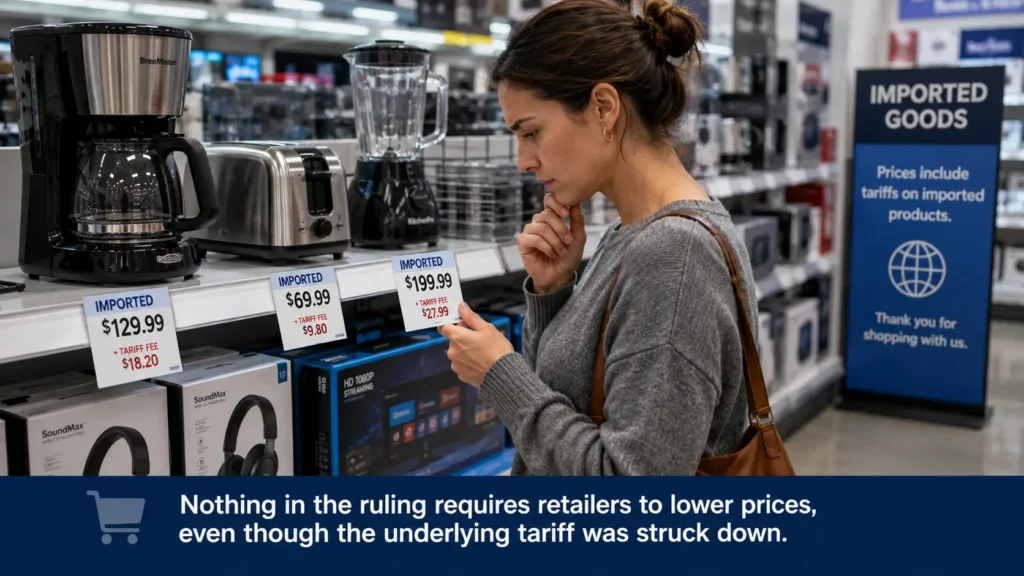
This is the part that is honestly uncertain. Now that the underlying tariff cost is eliminated, some businesses might cut prices, especially for goods where tariffs accounted for a sizable portion of the overall cost and there is fierce competition. However, pricing decisions are based on many different input costs, and neither the ruling nor the refund procedure requires any retailer to cut prices. Just because the tariff was overturned does not mean that consumers will receive a price reduction.
What this means if you are not an importer
This decision does not result in a direct payment for the great majority of people. Since importers are no longer required to incorporate the invalidated IEEPA tariffs into future costs, it may result in lower prices on some imported goods in the future, albeit gradually and unevenly. Many import expenses have not decreased because other tariffs imposed by various legal authorities are still in effect.
The calculation is different and worthwhile if you are in charge of a company that imports goods directly. Since the 180-day protest clock is already running on entries as they liquidate, companies that paid IEEPA tariffs as the importer of record should now collect entry numbers, HTS classifications, and duty payment records.
What happens next
CBP’s CAPE refund system is still in its early stages, and the Court of International Trade and the agency are still figuring out how to handle the majority of claims. Rather than being resolved quickly, expect this to develop over the second half of 2026, with importers under constant pressure due to individual protest deadlines. check out more info on our official blogspot profile.
FAQs
Will I get a tariff refund as a regular consumer?
No, refunds are only given to the importer of record, the company or customs broker that paid the tariff directly; retailers who passed the cost along or the final payers are not eligible.
What did the Supreme Court actually rule on February 20, 2026?
The Court invalidated a number of tariffs imposed since early 2025 under the International Emergency Economic Powers Act, ruling 6 to 3 that the president is not authorized to impose broad tariffs under that particular law.
Are all tariffs from the past year affected by this ruling?
No. The only tariffs that were overturned were those imposed under IEEPA. There are still tariffs in place under other legal authorities, such as Section 232 tariffs on steel, aluminum, and automobiles and Section 301 tariffs on China.
How much money is involved in the refund process?
Based on IEEPA duty collections, which by mid-December 2025 had reached about 133 billion dollars, estimates point to up to 175 billion dollars, according to the Penn Wharton Budget Model.
Do refunds happen automatically for eligible importers?
No. In general, importers have 180 days from the date of an entry’s liquidation to actively file claims thru CBP’s new CAPE processing system, providing entry numbers, duty amounts, and liquidation records.
Could retailers be sued for not passing tariff refunds to customers?
Since the refund mechanism was designed to compensate importers of record rather than downstream buyers, the legal path remains unresolved despite some law firms pointing out an increase in litigation risk from consumer class actions on this specific issue.
Will prices on imported goods go down because of this ruling?
tariff refunds
Over time, it might be necessary for some products, but pricing decisions are influenced by a variety of factors other than a single tariff cost. How much, if any, of the savings are transferred to customers is unknown.
[…] Tariff refunds The Supreme Court struck down […]