
Europe Preparing for War, Across Europe, governments are raising defence budgets, building drone defences, reviving conscription and reserve systems, and encouraging citizens to keep emergency supplies at home. Officials mostly describe all of this as deterrence rather than preparation for a war they expect soon. Still, the scale of the change is unlike anything the continent has seen since the Cold War, and it is reshaping national budgets, borders, and daily life. Here is what is actually happening, and what is still uncertain.
The Money: ReArm Europe and the Five Percent Pledge
The financial backbone of the buildup is a European Commission plan called ReArm Europe, also known as Readiness 2030, which was presented in March 2025. It aims to mobilise up to 800 billion euros for defence by giving governments more fiscal room, creating a new loan instrument called Security Action for Europe, and encouraging private capital to fund military production. One of its central mechanisms allows countries to raise defence spending without triggering the EU’s normal budget rules, by up to 1.5 percent of annual economic output.
NATO set an even bigger target. At its summit in The Hague in June 2025, 31 of the alliance’s 32 members committed to spending 5 percent of economic output on defence and security by 2035, made up of 3.5 percent on core military needs and 1.5 percent on related resilience spending. European Union defence spending rose by roughly 60 percent between 2020 and 2025, yet euro area defence spending was still only about 1.5 percent of output in 2025, so the distance to those targets remains large.
Germany Leads, France Strains
The buildup is far from even. Germany’s 2026 federal budget earmarks about 108 billion euros for defence, a rise of around 25 percent that lifts spending to roughly 2.6 percent of output, with a stated goal of reaching 3.5 percent by 2029, six years ahead of NATO’s guideline. In April, Berlin published its first standalone military strategy since the Second World War, titled Verantwortung für Europa, or Responsibility for Europe, presented by Defence Minister Boris Pistorius. The European Central Bank has calculated that roughly 70 percent of the euro area’s extra defence spending comes from Germany alone.
France faces a harder balancing act. Its public debt stands near 119 percent of output with a deficit around 5.4 percent, and on October 1 Prime Minister Sébastien Lecornu unveiled 54 billion euros in savings in the 2027 budget, even as defence remains a priority. Poland, by contrast, is reported to be spending more than 4 percent of output on its military, one of the highest shares in the alliance. Some analysts describe the result as a two speed rearmament, with Germany, Poland, and the Nordic and Baltic states pulling ahead while more indebted countries struggle to keep up.
The Drone Problem on the Eastern Flank
If there is one threat driving urgency, it is drones. In September 2025, around two dozen Russian drones crossed into Poland, forcing the temporary closure of four airports, including Warsaw Chopin. Poland and the European Union called it a deliberate violation of Polish airspace, though some Western officials were more cautious about intent. NATO responded by launching Operation Eastern Sentry to patrol the alliance’s eastern airspace with fighters, surveillance aircraft, and air defence systems.
Incidents have continued through 2026. Romania has recorded at least eleven drone incursions since 2022, including a drone that struck an apartment building in the city of Galati on May 30. A Shahed drone exploded in Moldova on June 13. A drone entered Latvian airspace in August, attributed to Russian electronic warfare, and another entered Lithuania in September, where NATO jets shot it down. A June report from the International Institute for Strategic Studies assessed it as highly likely that Russia conducted a drone campaign against Europe, largely toward the end of 2025.
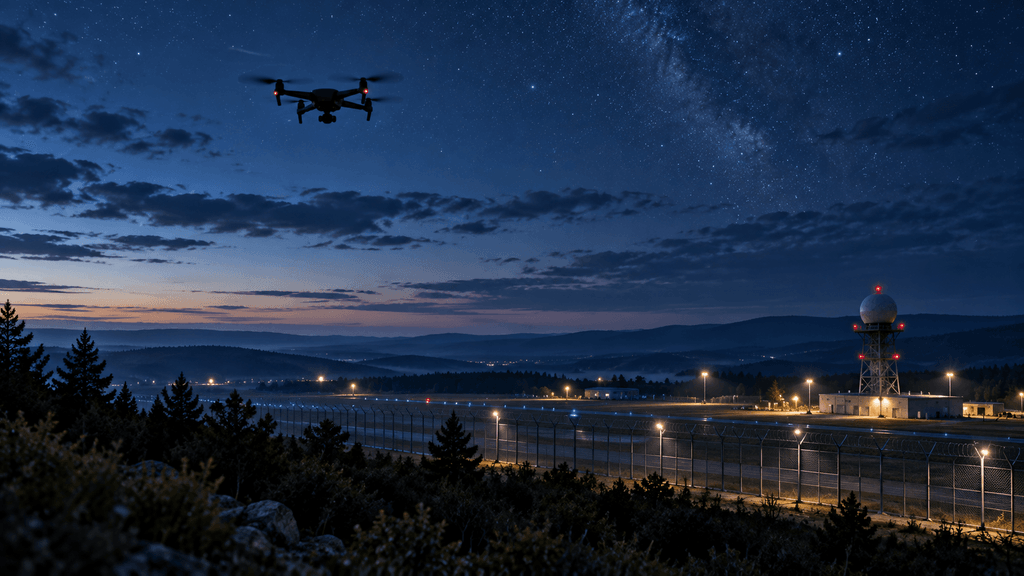
The response is expanding. NATO has introduced an initiative called Drone Edge to invest about 40 billion dollars in counter drone capabilities over five years, while the European Commission has proposed a European Drone Defence Initiative and an Eastern Flank Watch. Yet analysts warn of a production gap. Ukraine delivered more than 1.3 million drones to its military in 2024, and some experts say both Russia and Ukraine outproduce the entire European Union in drones by orders of magnitude.
A Gray Zone Threat, Not Open War
For most security analysts, the near term risk is not a sudden tank invasion but a steady stream of deniable pressure below the threshold of open war. That includes cyberattacks, sabotage, arson, attacks on infrastructure, and airport disruptions. Germany blamed Russia in August for a drone attack at a civilian airport. Polish Prime Minister Donald Tusk has warned that Russia could launch drone or missile attacks on NATO countries and disguise them as accidents. In September, Belarus, Russia’s closest military ally, held large exercises near the Suwałki Gap, the narrow corridor connecting the Baltic states to the rest of NATO, long regarded as one of the alliance’s most vulnerable points. Moscow has often denied involvement in incidents of this kind.
Commentators such as former US official Brett McGurk have argued that Europe is preparing because deterrence depends on what Vladimir Putin believes, and because America’s response to a widening conflict is less certain than it once was. Russia remains bogged down in Ukraine, but analysts note that it does not need another invasion on that scale to test NATO.
Civil Preparedness: From Shelters to Stockpiles
Preparation is not only military. Finland is often cited as the model for a whole of society approach, with a network of roughly 50,000 underground shelters able to protect about 87 percent of its population, along with a large reserve force built on conscription. The Atlantic Council has argued that Estonia, Latvia, Lithuania, Poland, and Romania should build comparable total defence systems that combine military readiness, civil preparedness, and public communication.
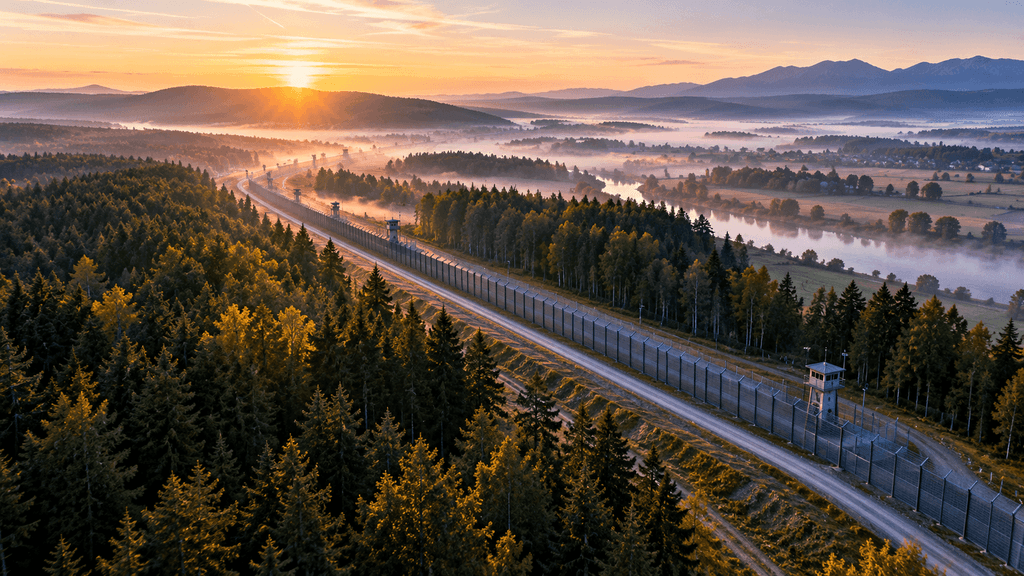
Elsewhere, the picture is more mixed. Several European countries have revisited conscription and reserve models because of manpower shortages, with Lithuania, for example, selecting conscripts at random. Along NATO’s eastern border, rearmament is taking physical form in reinforced fortifications meant to slow an armoured advance during the critical first days before reinforcements arrive. At the household level, the European Union has encouraged citizens to keep enough food, water, and supplies to cope for about three days in a crisis, a message that would have sounded unusual in Western Europe a decade ago.
The Doubts: Cost, Capacity, and Public Opposition
Not everyone is convinced the buildup is working or wise. Many European governments promised more spending but have been slow to turn pledges into concrete manufacturing contracts, leaving industrial capacity behind political rhetoric. Analysts also point out that during the Cold War, Western European states spent 3 percent of output or more on defence while building welfare states, whereas today growth is weak, debt is high, and Washington is rethinking its troop presence in Europe.
Opposition exists as well. Trade unions and social movements in several countries, including Italy, have argued that war focused budgets will come at the expense of public services, education, and research. How much citizens will accept in tradeoffs, especially in countries already cutting spending, is one of the biggest open questions.

So Is War Actually Coming?
No European government has said an attack is imminent, and the dominant official message is that the goal is to deter one. Some Western officials and analysts have warned that Russia could be capable of testing NATO within this decade, and estimates of that timeline have tended to shrink rather than grow. Moscow, for its part, has long portrayed NATO’s expansion and buildup as a threat to Russia. The honest answer is that Europe is preparing for a range of possibilities, from continued gray zone pressure to a more serious confrontation, while hoping the preparations make the worst outcomes less likely.
What to Watch Next
Several things will show whether the buildup is gaining momentum or stalling. France’s budget fight will test whether heavily indebted governments can sustain higher defence spending. Germany’s progress toward its 2029 target will show whether the biggest economy can lead. More drone incidents along the eastern flank, and how NATO responds, will shape how seriously the gray zone threat is treated. And the outcome of efforts to end the war in Ukraine, along with Washington’s future posture in Europe, will influence how much Europe feels it must do on its own.
This article reflects reporting and analysis available as of October 2026. Defence budgets, military incidents, and political positions change quickly, so details may shift. read more info visit our official issue pdf file.
FAQ
Is Europe preparing for war with Russia?
European governments are rapidly increasing defence spending and civil preparedness, but officials describe this mainly as deterrence. No government has said an attack is imminent.
What is ReArm Europe?
ReArm Europe, also called Readiness 2030, is a European Commission plan presented in March 2025 that aims to mobilise up to 800 billion euros for defence through fiscal flexibility, new loans, and private investment.
How much does NATO want its members to spend on defence?
At the June 2025 summit in The Hague, 31 of 32 members committed to spending 5 percent of economic output on defence and security by 2035, including 3.5 percent on core military needs.
Why are drones such a major concern for Europe?
Russian drones have repeatedly entered NATO airspace, including incidents in Poland, Romania, Moldova, Latvia, and Lithuania, and Europe produces far fewer drones than Russia or Ukraine, so countering them has become a priority.
What is gray zone warfare?
Gray zone activity includes deniable actions below the level of open war, such as cyberattacks, sabotage, airspace violations, and disruption of infrastructure, which analysts say are the most likely near term threats.
Which European countries are spending the most on defence?
Poland is reported to be spending more than 4 percent of its economic output on defence, while Germany is the largest contributor in absolute terms, with a 2026 defence budget of about 108 billion euros.