
hottest summer on record 2026, Three separate scientific agencies, working independently with different data sets, arrived at the same striking conclusion this month. August 2026 tied for the hottest month ever measured on Earth, matching a record set just three years earlier. It capped off a summer that broke records across multiple continents at once, and it fits into a pattern that has been building for a full decade now.
A Month That Tied the All Time Record
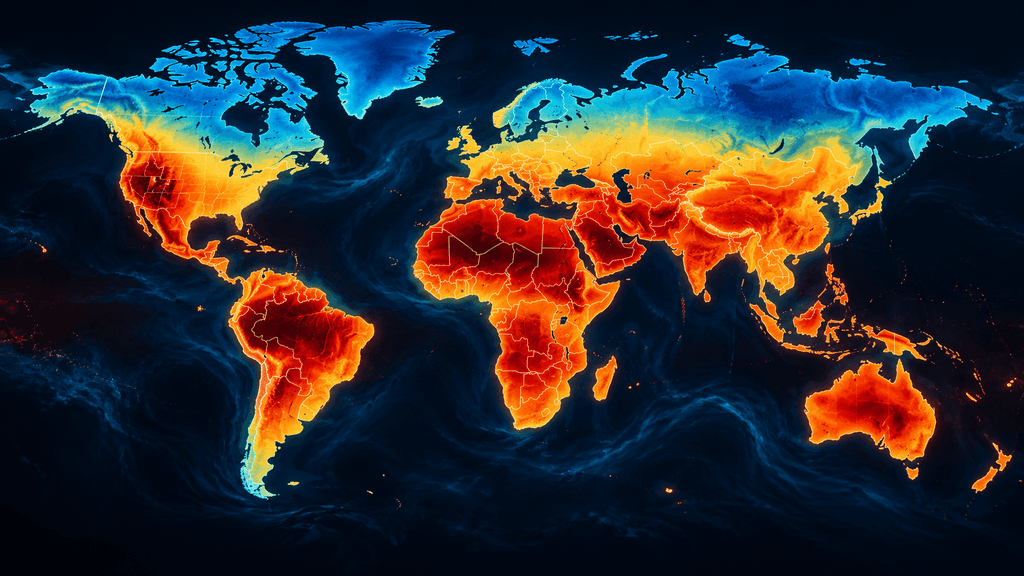
According to the European Union’s Copernicus Climate Change Service, August 2026 tied July 2023 as the warmest month in a data record stretching back to 1940. The global average surface air temperature reached about 62.5 degrees Fahrenheit, with the gap between the two record holding months coming in at less than one hundredth of a degree Celsius, essentially a dead heat between two extremes measured three years apart.
NOAA, using a separate dataset that stretches back to 1850, reached a nearly identical conclusion. The agency found August 2026’s global temperature ran 2.38 degrees Fahrenheit above the twentieth century average, making it the hottest August in a record spanning more than 175 years. Notably, all ten of the warmest Augusts ever recorded have now occurred since 2016, a detail that speaks to a sustained trend rather than a single unusual month.
The heat was especially pronounced in the United States. NOAA reported that the contiguous United States saw its mean August temperature reach 75.6 degrees Fahrenheit, a full 3.5 degrees above the twentieth century average and enough to break the country’s previous August heat record by more than half a degree, a wide margin in climate record terms where new records are often set by mere fractions of a degree.
An Entire Summer That Broke Records Too
The heat was not confined to a single month. Copernicus found that the June through August period, meteorological summer in the Northern Hemisphere, tied 2024 as the warmest summer ever recorded globally.
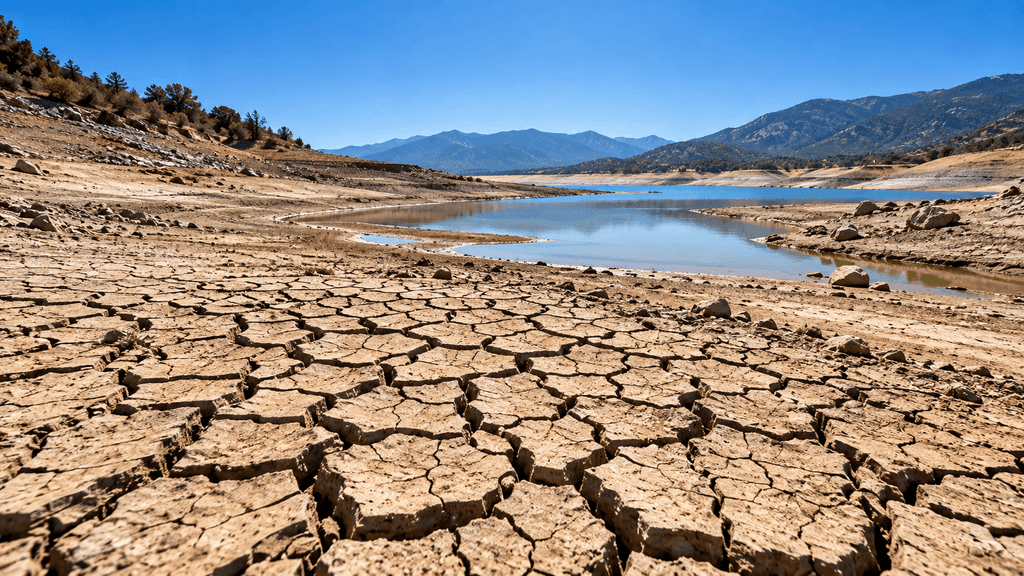
In the United States specifically, the numbers were even more dramatic. NOAA calculated the Lower 48 states averaged roughly 74.4 degrees Fahrenheit across the summer, nearly four tenths of a degree warmer than the previous record, which had stood since 1936, the peak year of the Dust Bowl. Put another way, the United States has now had two summers within this single decade that were as hot as or hotter than the worst summer of the Dust Bowl era, a period still remembered as one of the most extreme environmental events in American history. Arizona, Colorado, New Mexico, and Utah each recorded their single hottest summer on record in 2026, and July had already broken a separate long held Dust Bowl era mark before August extended the streak further.
Europe’s Uneven but Still Extreme Summer
Europe’s experience adds an important nuance to the global picture. Western Europe recorded its warmest summer on record, surpassing a benchmark set in 2003, a summer still remembered for a deadly heatwave that killed tens of thousands of people across the continent. Countries including England, Wales, Belgium, and much of France, Spain, Italy, Switzerland, and Austria all experienced their hottest summer in Copernicus’s dataset.
Yet oddly, August itself was only the fourth warmest on record for Europe specifically, even as it tied for the hottest August ever globally. Copernicus recorded the continent’s average land temperature at 20.26 degrees Celsius in August, about 1.1 degrees above the 1991 to 2020 average. That gap between Europe’s ranking and the global one is a useful reminder that a record breaking global average does not mean every region experiences the same extreme, since heat distributes unevenly across the planet in any given month.
What Europe did share with much of the world was drought. Severe dry conditions persisted across France, the United Kingdom, Hungary, Romania, and Serbia, in some areas dating back to May. Water levels fell sharply along major European rivers including the Rhine and the Danube, with knock on effects for ecosystems, agriculture, and river based transportation that depend on those waterways staying navigable listen to the complete discussion and expert insights on our official spotify episodes.
The Oceans Are Breaking Records Too
It was not only the air that reached record territory. Global sea surface temperatures, averaged across the world’s oceans excluding polar regions, hit their highest level ever recorded for the month of August, reaching just over 21 degrees Celsius and surpassing the previous August record set in 2023.
What makes this particularly notable is timing. Ocean temperatures typically peak in March each year, with August usually marking a smaller secondary high point. Instead, August 2026’s ocean temperature matched the all time record normally reserved for March, an unusual pattern that scientists at Copernicus specifically flagged as noteworthy. Making the streak even more striking, daily global sea surface temperatures had been running at record highs every single day since June 19.
Warmer oceans matter well beyond the temperature readings themselves. They tend to fuel more intense tropical storms, place additional stress on coral reef ecosystems, and contribute to long term sea level rise as warmer water physically expands, effects that unfold over years rather than showing up immediately in a single season’s data.

What’s Driving It
Copernicus attributed the extreme heat to a combination of two factors working together: the underlying long term warming trend linked to greenhouse gas emissions from burning fossil fuels, layered on top of a strong and still growing El Niño pattern in the equatorial Pacific Ocean. El Niño is a naturally occurring, cyclical shift in ocean temperatures that recurs every few years and temporarily amplifies global temperatures on top of whatever the underlying trend already is. Scientists generally describe the relationship this way, with El Niño acting as a short term amplifier riding on top of a longer running baseline shift, rather than as the sole cause on its own.
Where That Leaves Us
The extremes were not limited to the Northern Hemisphere. The Southern Hemisphere, in the middle of its winter season during these same months, recorded a near record warm winter of its own. Sea ice extent came in below average in both the Arctic and Antarctic during August, continuing a pattern that has drawn sustained attention from climate scientists in recent years.
Taken together, the string of records set in August, layered onto an already record breaking summer across multiple continents, and fitting into a longer pattern in which every one of the ten warmest Augusts on record has occurred within the past decade, paints a consistent picture rather than an isolated anomaly. Scientists tracking these figures will be watching closely as autumn data rolls in to see whether 2026 ultimately joins 2023 and 2024 among the hottest years ever measured, a question that should become clearer as the year draws to a close.
FAQ: hottest summer on record 2026
Was August 2026 really the hottest month ever recorded?
Yes, according to Copernicus, August 2026 tied July 2023 as the hottest month globally since records began in 1940. NOAA, using a separate dataset dating to 1850, also found it to be the hottest August on record.
Was summer 2026 the hottest summer ever?
Globally, summer 2026 tied 2024 as the hottest on record according to Copernicus. In the United States specifically, it was the outright hottest summer ever recorded, surpassing the previous record set in 1936.
What role did El Niño play in the 2026 heat records?
Copernicus attributed the extreme heat to a combination of long term warming from greenhouse gas emissions and a strong, growing El Niño pattern in the Pacific Ocean, which temporarily amplifies global temperatures on top of the underlying trend.
Did ocean temperatures also break records in 2026?
Yes. Global sea surface temperatures reached their highest recorded level for the month of August, an unusual result since ocean temperatures typically peak in March rather than August.
How does the 2026 heat compare to the Dust Bowl era?
The United States has now had two summers within this decade, including 2026, that were as hot as or hotter than 1936, the peak year of the Dust Bowl, previously considered one of the most extreme heat events in American history.
Which regions were hit hardest by heat and drought in 2026?
Western Europe recorded its hottest summer on record, surpassing the deadly 2003 heatwave benchmark, while severe drought affected France, the United Kingdom, Hungary, Romania, and Serbia, lowering water levels on major rivers including the Rhine and Danube.
FAQ
Was August 2026 really the hottest month ever recorded?
Yes, according to Copernicus, August 2026 tied July 2023 as the hottest month globally since records began in 1940. NOAA, using a separate dataset dating to 1850, also found it to be the hottest August on record.
Was summer 2026 the hottest summer ever?
Globally, summer 2026 tied 2024 as the hottest on record according to Copernicus. In the United States specifically, it was the outright hottest summer ever recorded, surpassing the previous record set in 1936.
What role did El Niño play in the 2026 heat records?
Copernicus attributed the extreme heat to a combination of long term warming from greenhouse gas emissions and a strong, growing El Niño pattern in the Pacific Ocean, which temporarily amplifies global temperatures on top of the underlying trend.
Did ocean temperatures also break records in 2026?
Yes. Global sea surface temperatures reached their highest recorded level for the month of August, an unusual result since ocean temperatures typically peak in March rather than August.
How does the 2026 heat compare to the Dust Bowl era?
The United States has now had two summers within this decade, including 2026, that were as hot as or hotter than 1936, the peak year of the Dust Bowl, previously considered one of the most extreme heat events in American history.
Which regions were hit hardest by heat and drought in 2026?
Western Europe recorded its hottest summer on record, surpassing the deadly 2003 heatwave benchmark, while severe drought affected France, the United Kingdom, Hungary, Romania, and Serbia, lowering water levels on major rivers including the Rhine and Danube.