
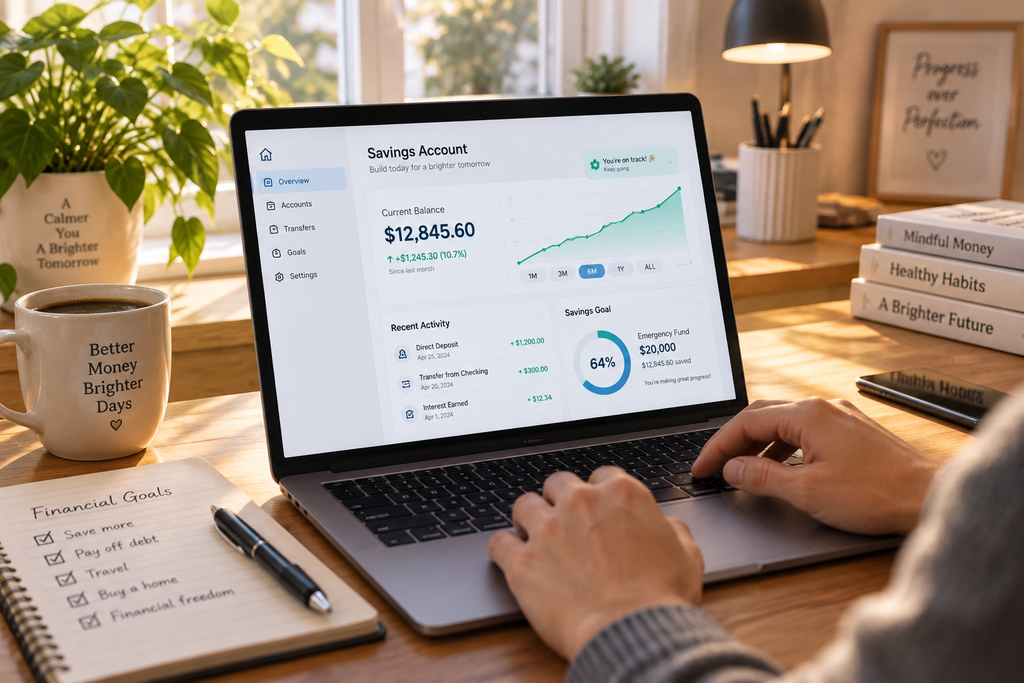
high yield savings account. If there is a silver lining to rising interest rates, savers are it. While borrowers are bracing for costlier credit cards and loans after this month’s Fed rate hike, anyone with money sitting in a savings account has an opportunity most people never bother to claim. The gap between what a typical bank pays and what a high yield account pays has rarely been this wide.
The Gap Is Bigger Than Most People Realize
According to the FDIC, the average savings account in the United States pays around 0.4 percent APY. Meanwhile, high yield savings accounts, mostly offered by online banks, are currently paying between 4 percent and 4.2 percent, with a handful of offers creeping close to 5 percent. high yield savings accoun
To put that in real terms, 10,000 dollars sitting in a typical savings account earns roughly 40 dollars over a year. The same 10,000 dollars in a high yield account earning 4.2 percent would bring in around 420 dollars over that same year, with no extra risk and no extra effort beyond opening the account.
That gap exists mostly because online banks skip the overhead of physical branches and pass the savings on to customers in the form of better rates. It is not a promotional gimmick or a limited time offer in most cases. It is simply how these banks are built to compete.
What Makes an Account Worth Switching To
Not every account advertising a high rate is equally worth it. A few things are worth checking before moving money.
FDIC insurance matters most. Confirm the bank is FDIC insured, or NCUA insured if it is a credit union, so your balance is protected up to 250,000 dollars per depositor, per institution, even if the bank fails.
Watch for promotional rates. Some of the flashiest numbers only apply for the first few months before quietly dropping to a lower standard rate. Read the fine print on how long the advertised APY actually lasts.
Check for monthly fees or balance minimums. A high rate does not help much if it comes attached to a fee that eats into your earnings or a minimum balance you cannot comfortably maintain.
Look at how easy it is to move money. Since these accounts are usually online only, you want a bank with a straightforward app or website and reasonably fast transfers to your everyday checking account when you need the cash.
high yield savings account
Who This Is Actually Good For
High yield savings accounts are best suited for money you want to keep safe and reasonably accessible, not money you are trying to grow aggressively. Think emergency funds, a house down payment you are saving toward, or cash you will need within the next year or two.
They are not a replacement for investing. Over the long run, a diversified investment portfolio has historically outperformed even the best savings account rate by a wide margin. The point of a high yield account is not growth, it is making sure your safety net earns something instead of sitting idle while inflation quietly erodes its value you can listen to or download the original podcast audio file from our collection on archive.org
The Bottom Line
Most people leave money on the table simply because switching banks feels like a hassle. But moving an emergency fund from a traditional savings account to a high yield one usually takes less than fifteen minutes online, and the difference in earnings can add up to hundreds of dollars a year without adding any risk. With rates elevated for the moment, this is a reasonable time to check what your own bank is actually paying you.