
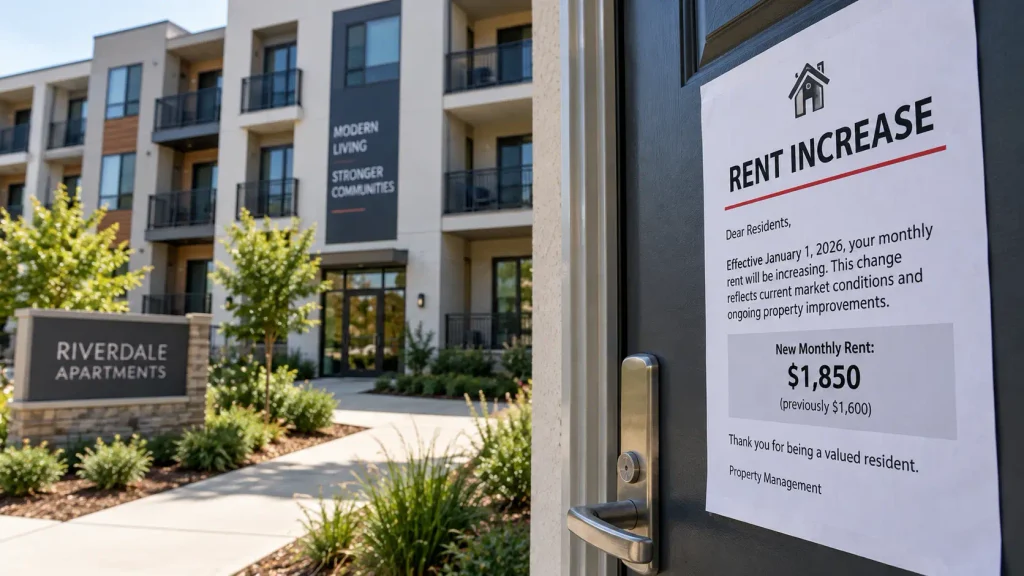
There’s a good chance that software, not a human, made the decision if your rent suddenly increased at renewal time or if you’ve been wondering why a grocery delivery app seems to charge you a different price than it charges someone else. A number of new state laws are attempting to define the boundaries of what these pricing tools can and cannot do, and regulators have begun to treat this as a serious issue.
What Is Algorithmic Rent Pricing?
What Is Algorithmic Rent Pricing?
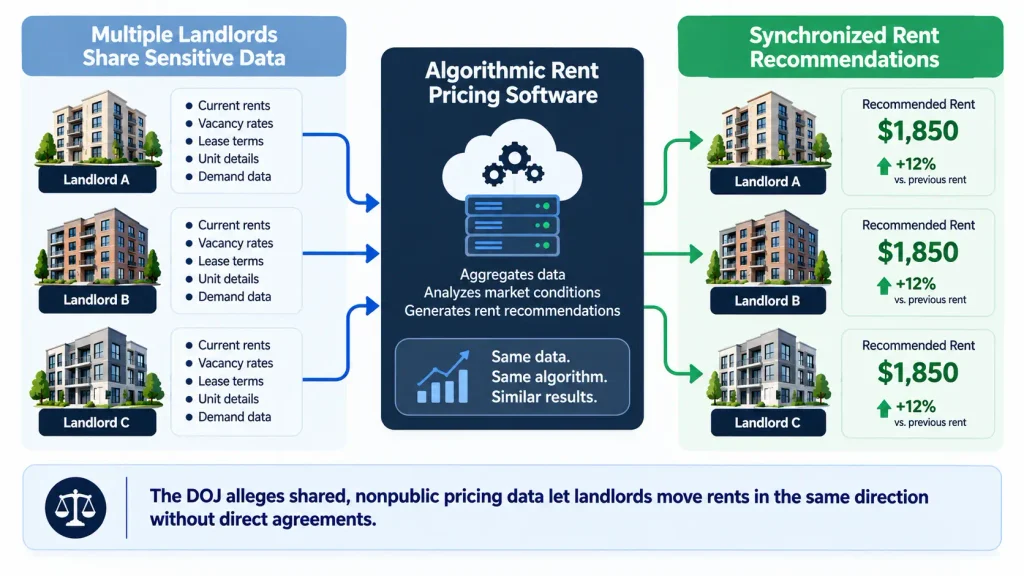
Revenue management software is used by several major property management firms to suggest rent rates and occupancy goals to landlords. One of the biggest providers, RealPage, is accused by the Department of Justice of developing a system that combined private, nonpublic pricing and occupancy data from rival landlords and then used that data to suggest coordinated rent increases for the whole market. The issue is that landlords who would typically compete with one another end up moving their prices in the same direction at the same time, achieving something close to price coordination without ever directly agreeing to it. This is not because software helps set prices.
According to a White House analysis that Axios summarized, algorithmic rent pricing tools cost renters an extra $3.8 billion annually. Due to RealPage’s use of these tools, the DOJ has sued the company directly and six significant national landlords separately. A few landlords have already reached a settlement. Greystar Real Estate Partners reached a settlement that permits it to keep using rent-setting software but prohibits it from using nonpublic, competitively sensitive data from other landlords—a more limited restriction than some of the new state laws impose. The DOJ’s more comprehensive proposed judgment against RealPage itself, filed in late 2025, is still awaiting final court approval. A related settlement involving property manager Willow Bridge followed in July 2026.
What Is Surveillance Pricing and How Is It Different?
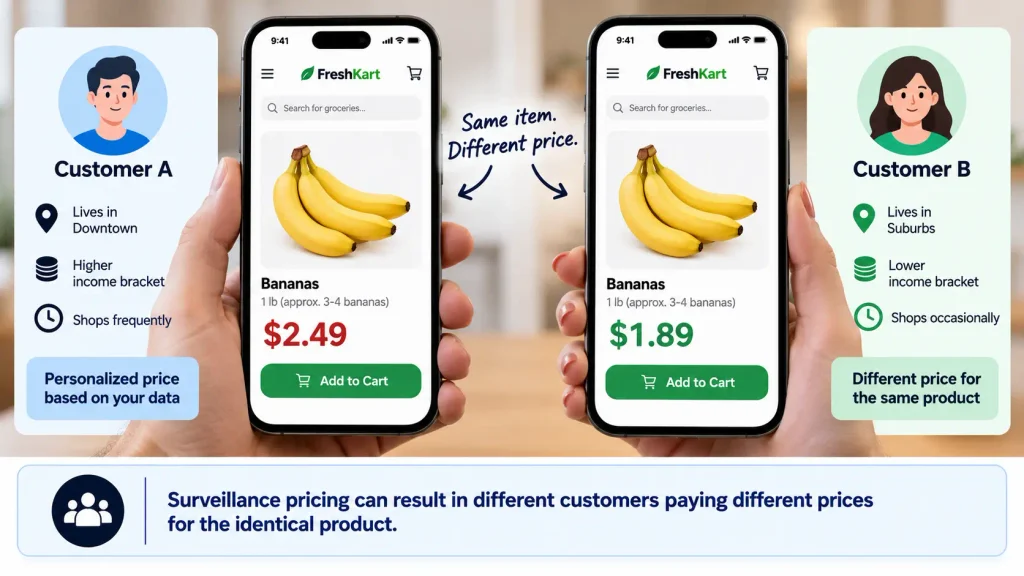
What Is Algorithmic Rent Pricing? A related but distinct idea is surveillance pricing. Instead of landlords working together, a business uses your personal information, browsing history, location, and previous purchases to determine a customized price for you that may be more than what someone else pays for the same product. This practice is specifically targeted by New Jersey’s Fair Price Protection Act, which was signed on July 23, 2026, making it illegal under the state’s consumer fraud law for grocery stores and food delivery services. Some common pricing practices, such as cost-based price differences, once-daily discounts for groups like teachers or veterans, and standard loyalty programs, are still permitted by the act.
Which States Have Laws on Algorithmic Rent Pricing?
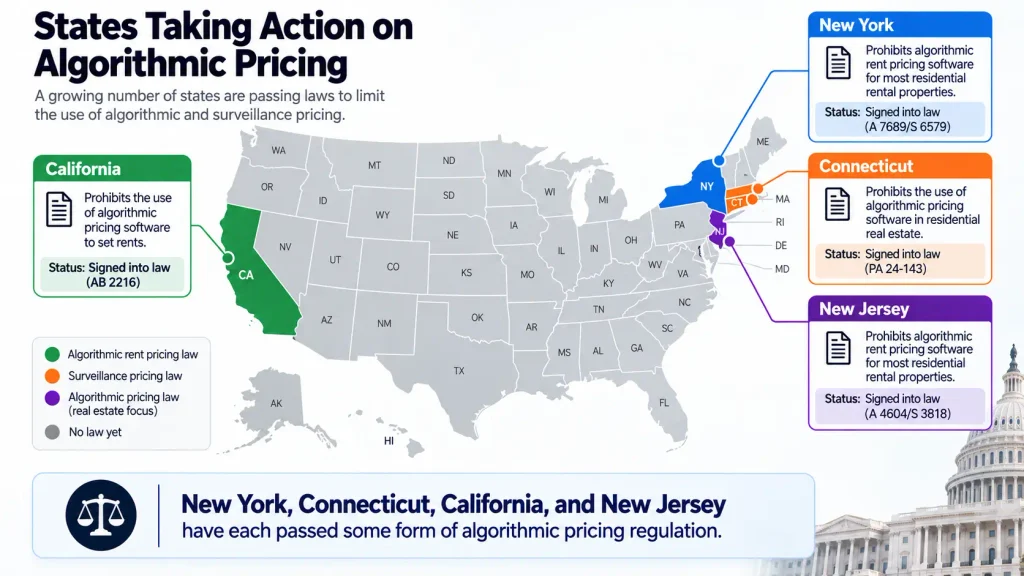
One of the first states to take action was New York, which passed a law that forbade rental pricing software from making recommendations based on data other than the user’s personal information and separately passed a more comprehensive Algorithmic Pricing Disclosure Act that required companies to notify customers when a customized algorithm determined their price. The National Retail Federation challenged the disclosure law’s constitutionality, but a federal judge dismissed the claim that it infringed on free speech rights.
Without limiting the use of information that is publicly available, Connecticut passed a more restrictive version that specifically targets rental software that uses nonpublic competitor data. Although Governor Newsom vetoed a more comprehensive 2025 bill that would have completely outlawed algorithmic rent setting tools, California has its own regulations. On July 20, 2026, New Jersey signed the Forbidding the Algorithmic Inflation of Rent Act, which went into effect on July 1, 2027, making it the fourth state to regulate algorithmic rent pricing. In April 2026, Maryland became the first state to explicitly limit data-driven retail and grocery pricing. Local restrictions have also been passed by a number of cities, including Portland, Seattle, Minneapolis, Philadelphia, and San Francisco.
The Preventing Algorithmic Collusion Act, proposed by Senator Amy Klobuchar at the federal level, would treat businesses that share competitively sensitive pricing information via software as presumed to have violated antitrust laws. That bill hasn’t passed and is still in committee.
What Algorithmic Pricing Laws Mean for Renters and Consumers
There is currently no requirement for a landlord to reveal whether software, fed by competitor data, contributed to your rent increase if you reside in a state without one of these laws. If you think this applies to you, it’s a good idea to find out if your state or city has implemented rent algorithm restrictions. This is because protections differ greatly depending on where you live. A few states now mandate disclosure when a customized algorithm determines your price for surveillance pricing, so if you live in an area where those regulations are in effect, it is worthwhile to review a retailer’s pricing disclosures.
What Happens Next for Algorithmic Pricing Laws?
What Is Algorithmic Rent Pricing? Rather than being a settled legal area, this one is still dynamic and growing. More states are anticipated to propose similar legislation in future sessions, the DOJ’s case against RealPage is still awaiting final court approval, and enforcement patterns are still being developed through ongoing litigation and settlements rather than a single, consistent national standard.
Frequently Asked Questions About Algorithmic Rent Pricing
How do I know if my rent was set by an algorithm?
It is frequently not evident because, aside from a few states, there is currently no universal disclosure requirement. It’s a good idea to find out if your landlord uses a major revenue management platform and if your state has complied with disclosure regulations.
What is the DOJ’s case against RealPage about?
The DOJ claims that even in the absence of direct agreements between landlords, RealPage’s software allowed rival landlords to exchange private rent and occupancy data, leading to synchronized rent increases across markets that operate similarly to price coordination.
What is surveillance pricing?
It is the process of determining a personalized price for a product based on an individual’s location or browsing history, which occasionally leads to different customers paying different prices for the same item.
Which states currently regulate algorithmic rent pricing?
It is the process of determining a personalized price for a product based on an individual’s location or browsing history, which occasionally leads to different customers paying different prices for the same item.
Does any state require disclosure of surveillance pricing?
The Fair Price Protection Act of New Jersey expressly prohibits surveillance pricing for groceries and food delivery, and the Algorithmic Pricing Disclosure Act of New York mandates that companies reveal when a customized algorithm determines a customer’s price.
Has any landlord actually been penalized for algorithmic rent pricing?
Indeed. In 2026, Willow Bridge reached a similar settlement with the DOJ, and Greystar Real Estate Partners agreed to cease using competitively sensitive, nonpublic data from rivals in its rent setting software.
Is there a federal law banning algorithmic rent pricing?
Not right now. The Senate has introduced a federal bill that addresses algorithmic price coordination, but it is still in committee and has not been passed into law.